
El palabrero. Part 2: The Plan | Translation
Share:
► Click here to return to the episode official page, or here to see all the episodes.
♥ We live in difficult times. We are a non-profit media, and our permanence depends on listeners like you. If you value our work, join Deambulantes, our membership. Help us elevate Latino voices and tell the story of our communities. Your contribution is directly invested in our journalistic work and makes all the difference.
►Do you listen Radio Ambulante to improve your Spanish? We have something extra for you: try our app, designed for Spanish learners who want to study with our episodes.
This podcast is the property of Radio Ambulante Studios. Any copy, distribution, or adaptation is expressly prohibited without prior authorization.
The following English translation was generated with the assistance of artificial intelligence
[Daniel Alarcón]: This is Radio Ambulante. I’m Daniel Alarcón.
In the last episode, we met this Salvadoran man:
[Rafael]: Sure, at some point I’ve had to shoot someone. Whether they died or not, I don’t know. Other crimes, too. Have I sold drugs at some point? Yes. Have I extorted someone? Yes. I mean, I can’t tell you I was in a world where I didn’t do anything. Of course there were times, of course there were.
[Daniel A.]: His name is Rafael. But for most of his 42 years, most people around him called him Rafa. That was his name inside the Barrio 18 gang. Rafa was a palabrero at the national level. Remember, “palabrero” is the term used for the leaders of the cliques, or cells, of gang members that operate in each neighborhood. Well, Rafa led every clique in the entire country. For years, Rafa acted as the link between the gang’s top leadership—who made decisions from inside prison—and the criminals who filled the streets of El Salvador with blood.
If you haven’t already, listen to that first part of the story. You can find it in our feed, right below this one. It’s essential for understanding what comes next, because that episode ended with Rafa in a complicated situation. A quick recap:
On January 30, 2023, Rafa got a call. His sister had been arrested by the police in El Salvador. She’d never had anything to do with any gang beyond being Rafa’s sister, but the arrest happened in the middle of the state of exception, under which police can take you to jail on mere suspicion of involvement in something illegal. No warrant, no trial, nothing.
[Rafael]: Damn, man. I felt like the floor dropped out from under me. I knew what I was about to go through, and, well—holy shit! Now what?
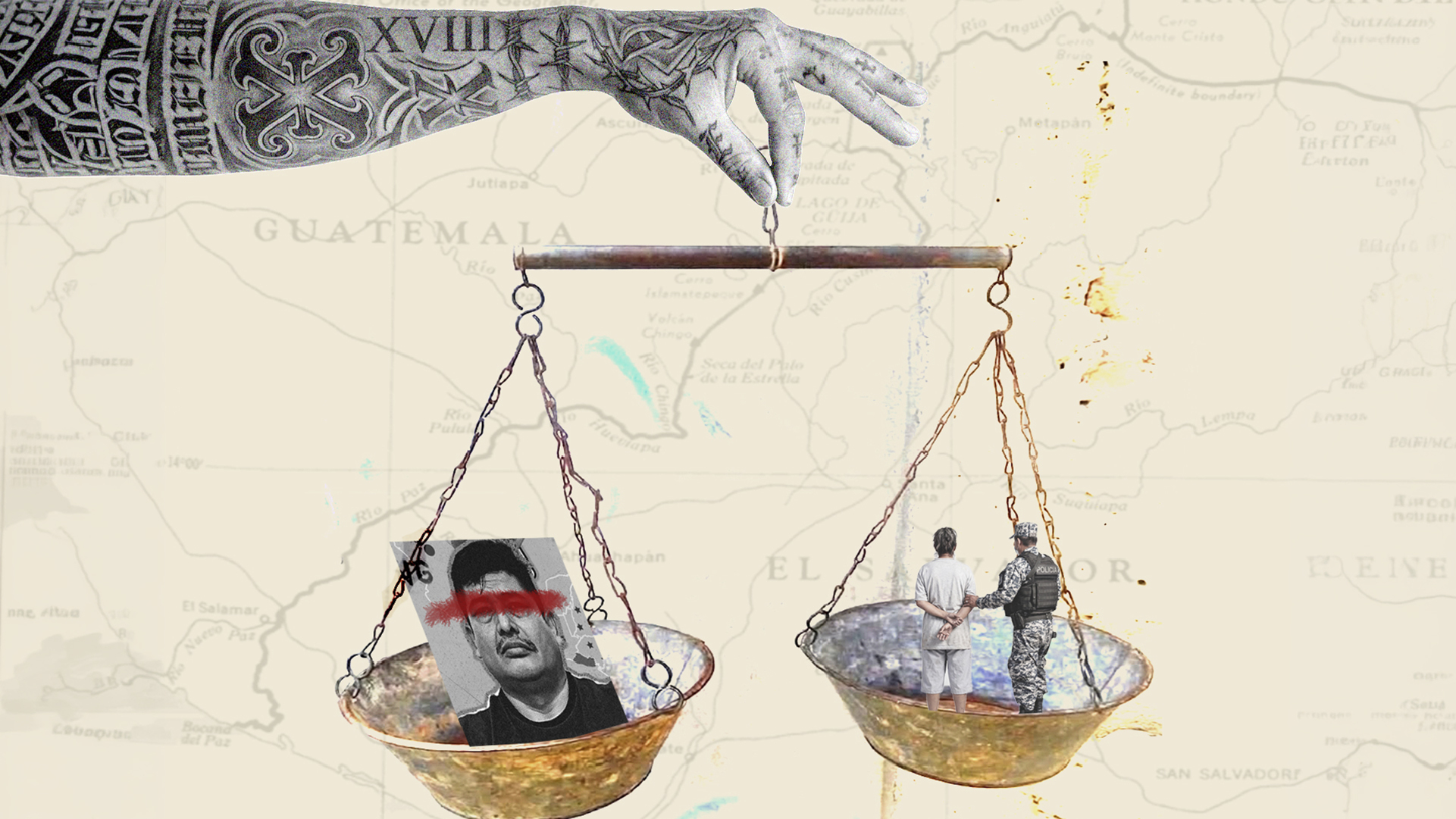
[Daniel A.]: But shortly after, an offer came in. A coyote Rafa had known for years was doing business with El Salvador’s national police. They were looking for a man—alias Crook, one of the top leaders of MS-13, Barrio 18’s rival gang. Crook had spent years behind bars, and the United States had requested his extradition. But as part of a deal with the gangs, Nayib Bukele’s government had illegally released him.
Investigations into that illegal release started to circulate. And at that moment, with presidential elections just months away, Bukele’s government wanted Crook back behind bars.
If Rafa agreed to capture Crook, his sister could go free. It was a deal struck under the table. One criminal hunting another, on assignment from a government.
Rafa agreed.
[Rafael]: I don’t know if I’d call myself a mercenary, some kind of employee, like a James Bond, who the hell knows. That’s the honest truth.
[Daniel A.]: Let’s call Rafa’s sister Julia. It’s a fake name, for her protection. She’s 41, one year younger than Rafa. From the start, she knew Rafa was a gang member. So did their mother. Honestly, it was obvious… it always had been. From the people who came looking for him at the house, from how he dressed. But beyond that, the details of what Rafa actually did—his crimes, his responsibilities within the gang—were never discussed. This is Julia.
[Sister]: He never told us anything, he never got us involved. We didn’t know absolutely anything.
[Daniel A.]: A pact of silence. He didn’t tell Julia and their mother, and they didn’t ask. Rafa kept his distance, partly driven by problems with his stepfather. And that pact held for nearly two decades—even after Rafa became a police target and went into hiding for years.
[Sister]: If I ever found out things, it was usually not through him, but through other people, because he always says the less the family knows, the better. You never want people saying, oh, they’re so-and-so’s sisters, because, well, that brings disadvantages, right? Because there are enemies out there, because you never know who’s listening.
[Daniel A.]: About his role as Palabrero, as a high-ranking gang member, and things like the negotiations with governments that Rafa took part in—about all of that, Julia says she had no idea until recently.
Which is exactly why what happened on January 30, 2023, came as such a shock to her.
[Daniel A.]: That day was supposed to be like any other for Julia. Work and errands. As usual, at 10 in the morning she went to the market in Chalchuapa, the town where she lived with two of her children. She was going to help her mother at the stall where she sold vegetables, pupusas, and tortillas. Her youngest son, still in elementary school, went with her. It was the last few days of summer break. Her oldest son, just entering his teens, stayed home.
During the morning, Julia worked with her mother at the stall, and around 3 in the afternoon she went to a copy shop to make some photocopies for her kids’ school.
That’s where she got a call from her oldest son. Some police officers were knocking on the door.
[Sister]: Oh yeah? What do they want? I asked him. Oh, he said. They say for you to come. Oh, I said. I’m just going to go pick up your brother’s school records, at the school, and then I’ll head that way, I told him. Okay, Mom, hurry up, he said.
[Daniel A.]: Almost right away, still at the copy shop, she got another call. It was her son again.
[Sister]: Mom, hurry, he says, hurry up. He told me they don’t have time to wait for you. Hurry up. Son, tell them, I said, that I don’t have a car, or a bike, or anything to get around, I have to take a minibus, I told him, or find someone to give me a ride. So I’m on my way. There were three calls like that, one after another, that my son made—until the last one. My son was already really distressed by then, because the police had already gone inside the house.
[Daniel A.]: Julia got scared. She left the copy shop and ran into a neighbor of her mother’s, who drove her home.
[Sister]: When I got there, there were three officers in gray camouflage outside, walking up and down the little street below the patrol truck, and three more in blue at the door of my house. The door was open, and my son was sitting on the couch with his phone.
[Daniel A.]: Julia greeted them and asked the officers what she could help with.
[Sister]: The first thing he said to me was: ma’am, why do you leave your son home alone? And I said: excuse me, but I have to work, and my son is old enough, and he knows perfectly well not to open the door to anyone, I told him.
[Daniel A.]: The officer asked for her ID. Julia’s hands were shaking. Then they asked for more documents—electricity bills, water bills. Then he accused her of occupying the house illegally. She showed him the papers proving she paid rent. Everything by the book.
The conversation was tense. But at no point did anyone mention Rafa.
[Sister]: You need to come with us, he told me. Oh yeah? I said. And where, I asked. To the station. He said: I need to ask you some questions. And why can’t you ask me here? I told him.
[Daniel A.]: But they insisted it had to be at the police station. Julia left the house with the officers. Already in the patrol truck, through the window, she told her youngest son, who was watching from the street, not to worry. That she’d be back soon.
[Daniel A.]: A few minutes later, Julia arrived at the local police station. She doesn’t know how long she waited before they told her a police chief would speak with her. Once there, the chief got straight to the point: he told her she was being detained for belonging to a group with criminal aims. A gang, basically. Julia couldn’t believe this was happening to her.
[Sister]: I was crying, but I was angry too. And I told him, why the hell couldn’t you just tell me that, tell me at my house, I said. Why do you—why do you all always have to come with lies and tricks to drag people out of their homes? He wouldn’t let me, I told him, hug my son. Say goodbye to them, I told him. I don’t know when I’ll see them again, I told him, what kind of heart do you people have? What a way to do your jobs! I told him.
[Daniel A.]: They handcuffed her, took her photo, and wrote down more information. They told her mother she was going to be detained. Then they took Julia and two other people to a police office in Santa Ana, the department capital. That’s where she finally broke down.
[Sister]: I couldn’t stop crying. I felt like I was suffocating. It was like I was living out what my mother once told my brother: someday we’re all going to pay for your decisions.
[Daniel A.]: “Someday, we’re all going to pay for your decisions.” And yes—despite Rafa’s efforts to keep them removed from his criminal activities, it wasn’t enough. His sister was detained, paying for Rafa’s crimes with no way to defend herself. He, meanwhile, was free. And now he would look for a way—whatever it took—to get his sister out.
This story is a co-production with El Faro. It was reported by Óscar and Carlos Martínez and produced by Luis Fernando Vargas.
Carlos tells us.
[Carlos Martínez]: Once in Santa Ana, Julia and the other detainees were taken to the police station to be fingerprinted and photographed, including photos of their tattoos, along with other information. Julia was on the verge of a panic attack when an officer asked her if she had any brothers in a gang.
[Sister]: Of course they’d already entered my information. It showed right there, so there was no point denying something they already knew, and I said yes—what’s his name? Rafael. Ah, okay.
[Carlos M.]: Back at the police office, Julia was held in a room. They gave her water and a little coffee. Around midnight, some officers came over to her. They wanted to ask her about Rafa.
[Sister]: They asked where he was, if I knew where he was, and I told them no. No, I really don’t know where he is. Oh, he said, how strange that you don’t know. Well, no matter how bad a person is, for their family they give everything, which is exactly what you just said. He’s always said the less one knows, the better, right?
[Carlos M.]: Then they started questioning her about her older son—not the one she’d left at home, but another one, an adult, who had emigrated to the United States. They asked if Rafa was with him.
[Sister]: Not that I know of, no. Ah, he said, because look, if your son is covering for your brother, helping your brother, your son commits a crime, he said, a collaboration charge, and we could even have him deported. So basically, they were trying to get to me on the deepest level, intimidate me or whatever, to get me to talk.
[Carlos M.]: The detectives raised the pressure. If she didn’t cooperate, they told her, they could take her house. Or go after her mother. Julia could only repeat what she’d said since they first started asking about Rafa: that she knew nothing about him. Not where he was, not how to reach him.
That same early morning, the officers transferred her to another police station. There, they put her in a cell.
[Sister]: I spent practically a week sleeping on the floor, freezing, no blankets, nothing, right on the bare floor. During the day, we’d just wash up, eat there, clean up so the rats wouldn’t come down and bite us while we were eating rice or whatever. I went in a little heavy, and within a week I’d gotten thin.
[Carlos M.]: On the second day there, they read Julia a paper stating she was being held because the police had received an alert about her criminal activities. Something vague, that was never made clear. Even so, it never occurred to Julia to tell the officers the truth—because although she had sworn she couldn’t tell them where Rafa was, the truth is, she actually knew.
[Sister]: But how was I supposed to talk about my brother? I mean, I don’t think anyone in the family—no one—would turn in their own brother, right? Because I know my brother could do a lot more for me out there than in here, right? Because of his contacts, his intelligence, his rank, whatever.
[Carlos M.]: After seven days in the station’s holding cell, they took her to Apanteos, the prison in Santa Ana.
[Sister]: They put on this whole big show—three patrol trucks, sirens blaring, us out there, pushing buses and trucks and everything out of the way. And people watching, some probably thinking, poor thing, she’s innocent. And plenty of others thinking she’s guilty, already looking at you like you’re something bad.
[Carlos M.]: Once inside the prison, things actually got a lot better. She was placed in the women’s wing—not with the gang members, but with women who’d committed other crimes. At least now she’d sleep on a mat instead of the floor, and her cellmates supported her from the start. They took her in, guided her through the days she was most afraid.
In the days that followed, she wasn’t given the chance to see a lawyer. But at least there was some contact with the outside. Her mother was able to send her food, toiletries, things to make everything a little more bearable. Julia shared it with some of her cellmates.
[Sister]: I had rolls of toilet paper. I had milk, cereal, Incaparina, crackers, bread, candy—everything. And I shared it. I gave it to them. And the girls were so grateful. Because, like I said, in there you have to stick together, because we’re all in the same boat, even if we’re going through different cases.
[Carlos M.]: And she prayed. She prayed to get out and see her family again.
[Sister]: And that’s how I kept myself strong.
[Carlos M.]: Was it because you believed your brother was going to do something?
[Sister]: It was more the faith I had in God. And second, my brother. The doubt that stayed with me was that they were after him to capture him, not to negotiate. So I kept thinking, how much can my brother really do? Practically nothing. I mean, I didn’t know anything.
[Carlos M.]: But as we already heard in the first part, the reality was different. Rafa could, in fact, do something: negotiate. And during those days, he was trying to get Julia out.
On March 13, 2023—almost a month and a half after her arrest—Julia got a surprise. She was told she’d have a hearing in three days. She was hopeful, and told her cellmates. Not long after, she got another unexpected piece of news, from the officer in charge of her section of the prison.
[Sister]: Ma’am, she said, go get ready, put on some pants, get your toothpaste, some underwear, get ready, because you’re leaving right now. What? I’m leaving? No, it’s just that they’re coming to get you now for your hearing. What? And I ran off to the cell, I was so happy I couldn’t stand it—I couldn’t stand it, I was so happy. I threw a few things together and ran out. No, take care, I don’t know what, you’re leaving, I don’t know what, I don’t know how much. And I was so nervous…
[Carlos M.]: She walked to the exit of the prison. Julia prayed, caught somewhere between gratitude and fear.
[Sister]: But then I was surprised to see police officers, and I thought, huh, this seems off, I thought, so strange, so strange, and I got even more nervous, because of my brother. I thought, I don’t know if they’re taking me somewhere to torture me, to get information out of me, I don’t know what—like you expect, well, anything at all.
[Carlos M.]: She got into the patrol truck. They arrived in San Salvador, the capital, a little over an hour away. It was around 7 in the evening. She wasn’t taken to a prison, but to a house. For a second, Julia thought it was a hotel, but once inside, what she saw were police officers. They took her up to a room, and she was shocked to find it full of bars—bars on the windows, on the door. They’d turned it into a cell.
[Sister]: There were two young men inside, where I was going to stay, but it was divided by bars, and I just—I started crying, I couldn’t stop crying. Because I honestly, truly believed they were going to torture me.
[Carlos M.]: But seeing the state she was in, one of the other men being held there spoke to her.
[Sister]: He told me: ma’am, calm down, if they brought you here, it’s for something good.
[Carlos M.]: He told her he’d been there for 10 months. He was a “criteriado”—a legal term used in El Salvador for people who’ve been arrested for crimes but agreed to collaborate with authorities to dismantle the gangs. From the start, the police had made a deal with him, and he’d never once set foot in a real prison.
[Sister]: So he already knew, you know, the ins and outs of it, the situation, how everything worked. So he started saying things to me. He knew, and he said: no, ma’am, take it easy, he told me.
[Carlos M.]: He kept telling her everything would be fine. Either way, Julia slept badly that night. It wasn’t a prison, but the conditions weren’t good either. There were no beds—just a piece of cardboard—and the room was infested with mosquitoes. The next morning, an officer came to see her. He told her she’d see her mother soon. Julia thought the police had caught her mother, and she started crying.
[Sister]: He told me: calm down, ma’am. Your mother’s fine. Nothing’s happened to your mother. Nobody’s touched your mother. She’s coming to see you, that’s all. And not just that. Your kids are coming too. And me? How? My kids. I’m going to get to see my kids, my mom, hug them and everything? Yes, yes, yes, yes. Calm down. You’ll see it all soon enough.
[Carlos M.]: A little later, Jefe Iván arrived—the officer we heard negotiating with Rafa in the last episode. He greeted her, and they put her in a car with him and other officers. On the way, they asked if she could identify gang members from the area where she lived, but Julia told them she didn’t know anyone. After a few minutes, they arrived at a park. They waited a while… until she saw them…
[Sister]: When I saw them coming toward me—my little one, my son, my mom—she’d told me not to make a scene or anything, but there was no way I wasn’t going to hug them, wasn’t going to cry. I mean, the joy of being able to see them, hug them, touch them, all of it. Seeing my mother was truly a miracle, a miracle… that’s the only way to describe it: a miracle.
[Carlos M.]: After the hugs, Julia noticed that her mother and children had arrived with a man. It was Kevin Genovés, an acquaintance of Rafa’s who had offered him the job of capturing Crook. But Julia didn’t recognize him, and at the time didn’t think much about why he was there.
Julia sat down with her children and mother, just to be together. They’d brought her a hamburger and fries. And as Julia said, if you look at what’s happened in El Salvador over the last four years under the state of exception, it really does seem like a miracle. Since the state of exception was put in place, getting out of a Salvadoran prison is practically impossible. And there she was, with her children, her mother, in a park. With no idea, though, of what was happening behind the scenes.
Right there, they told her that her mother could visit her at the safe house, and that she was free to bring her food.
Before saying goodbye, Kevin Genovés took a photo of Julia, her children, and her mother, and sent it to Rafa. Then, the officers took Julia back to the house where she’d spent the night before. They didn’t go in right away. In the yard, Jefe Iván and the man in charge of the house, whom they called don Róger, spoke plainly to her. It was the first time she understood what had actually been happening since it all started, more than a month before:
Her release wasn’t due to any miracle, but to her brother, Rafa.
[Sister]: And they told me: there you go, ma’am! See that now? They said, see the power we have? We have a deal, a negotiation, with your brother. And don Róger told me: I’m the one in charge here, I have the power. If your brother doesn’t cooperate, if he doesn’t hold up his end of the deal we have with him, I have the authority to send you right back to prison.
[Carlos M.]: Finally, they asked her to call her mother. To tell her how important it was that her brother had to cooperate.
[Daniel A.]: A quick break, and we’ll be back.
[Daniel A.]: We’re back on Radio Ambulante. Carlos continues the story.
[Carlos M.]: Okay. Let’s back up a bit, to the reunion in the park between Julia and her family. There, a police officer pulled Rafa’s mother and Julia aside to talk more privately. He told them something Rafa had already told us in the last episode: they didn’t trust Kevin. This is Rafa.
[Rafael]: Look, that guy doesn’t inspire any confidence in us. Right, that was Kevin. They assigned him to be on your side, but he doesn’t inspire confidence in us. Tell your son to call me. He knows this is better. To keep things airtight—that’s better.
[Carlos M.]: The police wanted Kevin Genovés out of the picture, and to negotiate directly with Rafa. With the threat that officers could send Julia back to prison at any moment, Rafa felt he had no other option.
Over the several days that Rafa negotiated the terms for capturing Crook with Jefe Iván, Julia stayed at the police safe house—the same one where they’d taken her before her reunion with her family in the park. Conditions weren’t as bad as when she’d first arrived: her mother sent her money and food, and even visited. But the officers’ threats were constant.
[Sister]: They’d take me out to the yard to talk, and to pressure me, they’d say things like, well, ma’am, you’ll see, I just sent so-and-so back to prison. Meaning, no cooperation, back to prison.
And the same could happen to you if your brother doesn’t come through, you’ll go right back to prison. And I’d say the same thing back: what can I do? I can’t do anything, my brother will figure it out, my brother is smart and he knows how he’s going to help you all and support you.
[Carlos M.]: Every so often, don Róger, the man in charge of the house, would come talk to her in her cell.
[Sister]: That’s what don Róger would tell me. You’re a piece of collateral, he’d say—meaning, I wasn’t a detainee, I was collateral. Whether things went well or badly, they knew exactly how they were going to use me.
[Carlos M.]: That was the routine for several weeks. Meanwhile, Rafa kept up the pressure: he wouldn’t lift a finger to capture Crook until he saw his sister completely free. Almost three months after Julia’s arrest, on April 22, 2023, the police finally gave in to Rafa’s condition. Jefe Iván called him.
[Rafael]: What happened? He told me: it’s done, your sister’s situation is going to be taken care of. Be patient, it’ll happen soon.
[Carlos M.]: And he kept his word: that very day, police took Julia to the prison, but this time she was going to pick up her release paperwork. And I think it’s worth pausing here to point this out: this was a document that existed not because a judge had ordered it, but because of conversations between a police officer and a gang member on the run from justice.
When she arrived at the prison, Julia was nervous. She’d already been out once, and the idea of going back in, with no guarantees of anything, was terrifying. Once inside, they told her she’d have to wait one more day, which only made things worse for her emotionally.
But when the next day dawned, they put her in a car. There, the officers handed her a phone. It was don Róger, the man in charge of the safe house.
[Sister]: Ma’am, how are you feeling? How are you doing? See, you see how anything’s possible. Look, thanks to your brother and to us, you’re free now, whatever. Look, enjoy it. Yes, thank you so much. And what’s all this? Listen. It’s fine, ma’am. When you get home, you’re going to get yourself a phone, a SIM card, and you’re going to check in with me every single day.
[Carlos M.]: To keep her under control. When she got to her mother’s house, an officer knocked on the door.
[Sister]: And then he says: ma’am, here’s your daughter. My mom—what? My mom just froze. My mom, straight to the point, says: and we need her clothes, a T-shirt or something for her to change into. Why? Because, she says, she doesn’t want to get out of the car in all white.
[Carlos M.]: In white—the prison uniform. When her mother finally reacted, she went to get the clothes. Julia changed in the car. Then, she got out.
[Sister]: They took photos of me as I walked into the house. They took a photo of me with my mom, sort of to say, look, ma’am, we’re handing her over safe and sound, ma’am, we’re delivering her to your home. And, well, it’s fine.
[Carlos M.]: Even once she was inside her mother’s house, Julia still couldn’t quite believe it. She couldn’t stop thinking they’d take her back to prison. But after a while, the officers… left.
From that moment on, Julia began checking in with don Róger by phone every day. Confirming she was still in El Salvador. Confirming that, if Rafa didn’t hold up his end of the deal, they could come for her.
Even free, Julia was, effectively, still a piece of collateral.
With his sister free, Rafael had no more excuses. He had to hold up his end of the deal. Catch one of the most powerful criminals in El Salvador… the most wanted man in the country. Crook.
Everything that had happened with Crook was a stain on Nayib Bukele’s image. The story we published in El Faro about the criminal’s release was irrefutable proof that his government had negotiated with the gangs behind closed doors. Something Bukele denies to this day. It undermined his entire narrative.
Bukele was hoping to hold onto the presidency in the elections coming up in a few months, so a scandal like this was a real risk.
According to reporting we did at El Faro, after a government official had driven Crook to the border with Guatemala to be released in late November 2021, he’d made his way to Mexico, where he had the backing of the Sinaloa Cartel. His gang, Mara Salvatrucha 13, had done business with that criminal organization in the past.
Rafa gave Jefe Iván a plan—a bold one: convince the Jalisco New Generation Cartel, Sinaloa’s rival, to help them capture Crook.
[Rafael]: Who’s better positioned to grab him than Sinaloa’s rival, in this case? You know what I mean?
[Carlos M.]: Rafa proposed to the officer that he could travel to Chiapas with a group of 17 or 20 homeboys—gang members under his command. He’d heard that the Jalisco New Generation Cartel needed soldiers, and he could supply them.
The strategy was to win their trust, and when the moment was right, Rafa would make his pitch: payment in exchange for capturing Crook. He’d tell them he was working for a wealthy businessman whom Crook had wronged.
It was a delicate operation.
The elite organized crime unit officer at DECO would tell him, sure, go ahead, go work with Jalisco New Generation.
[Rafael]: Yeah, and if that was the way to build trust and get the job done, it had to be done. And so, there we go, I’ll tell you. But look, I honestly don’t know what the hell we’re getting into or anything. I mean, communication might go quiet for a while, and meanwhile, let things flow. No, it’s fine, it’s fine. Alright!
[Carlos M.]: Here we need to talk about Jefe Iván’s identity.
Reporting we’ve done at El Faro shows that Jefe Iván was no ordinary police officer. We confirmed that the phone numbers this person used to communicate with Rafa were officially linked to Inspector Raúl Eduardo Reyes Escuintla, head of the Elite Division Against Organized Crime, DECO, of the El Salvador National Police. But to avoid confusion, we’ll keep referring to this person as Jefe Iván.
What is clear is that he’s a high-ranking officer. With real power. But even so, in his communications with Rafa, Jefe Iván would mention someone else. Someone he referred to as “the boss” or “the man.”
[Jefe Iván]: Look, my friend, I’ll get straight to the point, I’ve got three things for you, and I also—I also want to hear, you know—two things from you, which is what he’s asking for, right, the boss.
[Rafael]: Let’s do it.
[Carlos M.]: Someone of higher rank than Jefe Iván within the government. We were never able to confirm the identity of “the boss.” However, in terms of the official chain of command, Inspector Reyes Escuintla—Jefe Iván—answers only to the Director General of the National Police, the Minister of Public Security, and the President of the Republic.
When we were reporting this story, in early 2024, we called the phone number linked to Inspector Raúl Reyes Escuintla.
[Jefe Iván]: Hello, hello…
[Carlos M.]: Hello, Jefe Iván. How are you? Hello? Am I speaking with Jefe Iván?
[Jefe Iván]: Hello?
[Carlos M.]: Hi, good afternoon.
[Jefe Iván]: Hello.
[Carlos M.]: Good afternoon, am I speaking with Jefe Iván?
[Jefe Iván]: Yes, go ahead.
[Carlos M.]: How are you, Inspector Escuintla?…
I introduced myself as a journalist with El Faro. We told him we’d traced his phone through his communications with Rafa, and that we had evidence of his contact with the gang member regarding Crook’s capture. We asked whether he’d planned the operation himself or been assigned to it.
[Jefe Iván]: Um, who am I speaking with, sorry?
[Carlos M.]: This is Carlos Martínez, from the newspaper El Faro. Hello?
He hung up on us and never answered our questions. We also called don Róger’s number to verify the information, and he hung up on us too.
But let’s get back to the conversations between Rafa and the officer. To start looking for Crook, Rafa needed money.
[Rafael]: You’re making this hard for me, chief, I told him, because, I mean, you’re sending me to do business, and you’re sending me to do it with… with nothing, basically. How am I supposed to come in with an offer without, I mean, without showing that at least I have the means to look legit? I mean, how am I supposed to do a deal involving real money with nothing to show for it?
He asked for 6,500 dollars… he got 4,000. Once he had the money in hand, he told Jefe Iván he was going to travel to Mexico with his team. He said he’d be out of contact most of the time. So, even though he’d just secured his sister’s release, Rafa decided to involve Julia again. She would serve as the go-between for Rafa and the Salvadoran police. That way, too, it wouldn’t raise suspicion.
The Salvadoran police began sending Rafa leads on Crook’s location. They passed them along through Julia.
[Sister]: So I was the go-between. I’d pass questions or things to my brother, and information, and things like that.
[Carlos M.]: Julia only spoke with don Róger, whom she stayed in contact with every day. The officer would tell her that his intelligence network had information that Crook was in a certain place, or that he’d moved somewhere else… things like that.
In turn, Rafa sent updates through his sister. They were mostly vague—that he’d be in touch the next day, or in a couple of days. But every so often he’d report that his homeboys, his subordinates in the gang, had swept through some neighborhood in Mexico and found nothing. Or that they’d gone somewhere and found some weapons, but no trace of Crook…
[Rafael]: And that’s how we kept playing it, feeding them little bits so they wouldn’t get anxious—me not giving them much, but still getting something out of it.
[Carlos M.]: Getting something, he says. Getting time and money. Because the reality was that Rafa wasn’t in Mexico looking for Crook. No. Rafa was still in Guatemala. He’d never involved his gang members, and he’d never spoken with the Jalisco New Generation Cartel. In fact, at no point had he lifted a finger to look for Crook.
The whole thing was a massive scam.
And the Salvadoran police, whether out of desperation, naivety, or Rafa’s own skill, fell for it.
[Daniel A.]: A quick break, and we’ll be back.
[Daniel A.]: We’re back on Radio Ambulante. Carlos tells us the rest of the story.
[Carlos M.]: Okay. So, it was all a deception. Rafa wasn’t looking for Crook. But at first, he did think about following through on his end of the deal.
[Rafael]: I’ll be honest with you. If I asked around, some friend of mine, I’d say, look, what are the chances, you think? Yeah, maybe. Depends who it lands with. Yeah, maybe they’d catch that son of a bitch.
[Carlos M.]: But over time, he reached a conclusion. Holding up his end of the deal meant handing more weapons to the government of El Salvador—a government that had already torn his gang apart. His people.
[Rafael]: But there came a point where I started thinking, this isn’t worth doing. Handing that guy over to the Salvadoran government meant handing them more tools for lies, for deceit, for corruption—being complicit in keeping all that covered up. And seeing how they were coming after us, tearing us apart, rounding up families, and they’d taken my sister… I mean, it’s like sleeping with the enemy.
[Carlos M.]: When I first spoke with Rafa about this, he’d already been deceiving the Salvadoran government for about five months. He agreed to meet my brother Oscar and me in Guatemala City to tell us more. At that point, he still wasn’t sure how his big con would end. He was exploring alternatives. Talking to us—telling us how the government had negotiated with him, a gang member, to capture another criminal—was a way to get that whole dark deal on the record. It may also have been a way to protect himself a little, in case the government uncovered his scheme.
And Rafa knew it. There was a real chance his whole plan could fall apart at any moment. He’d warned his family they might have to leave the country on short notice. He told them without much explanation, because they still didn’t know the details of the deal he’d made with the government.
That’s why Rafa was putting together a new plan. He had something valuable: he knew things that could interest a lot of people—especially information about the negotiations between the gangs and the Salvadoran government. And he thought maybe he could sell that to a better bidder than Nayib Bukele’s government. The government of the United States, for instance.
[Rafael]: And yeah, the offer to preferably work for them—it’s about finding a way out, an alternative, a different life. The chance to be able to die in peace. Me and my family.
[Carlos M.]: Rafa wanted to buy, with privileged information, the chance at a normal life. To erase the path he’d taken since he was a teenager. The one that turned him into a criminal leader.
He wanted to go back to being no one.
While he worked on finding a way to establish contact with the U.S. government, Rafa kept up his lie. But it was reaching a breaking point. Through his sister, he started saying that negotiations with the Jalisco New Generation Cartel had already begun. Jefe Iván kept pushing to reach an agreement, and Rafa, trying to keep him calm, even suggested the officer join a call with them.
He’d present him as the wealthy businessman Crook had wronged. Honestly, the whole thing sounded absurd. Rafa even told Jefe Iván at one point that the meeting was set. But in the end, the officer backed out.
[Rafael]: The day before the supposed meeting, he calls my sister and tells her: tell him to do what he has to do. Whatever he tells us. That’s it. That I should negotiate the price, and everything. Because that’s what the call was supposed to be for—negotiating prices.
[Carlos M.]: And what were you going to do if he said, go ahead with the meeting? Who were you going to send? Who were you going to play the part? A cartel member?
[Rafael]: I’ll be honest with you. I was cornered. I was cornered. But I was going to play it out, take it all the way—and then, one day before, he called and said no, that he should negotiate himself.
[Carlos M.]: Cornered, meaning, in trouble.
After the fake call between Jefe Iván and the cartel fell through, Rafa waited a few days. He wanted to make it look like negotiations with the cartel were still underway. He didn’t send any messages to the police. He stayed completely out of contact.
[Rafael]: I take my time, a day, two more days, and he’s anxious, waiting on a price and all that, and meanwhile I take it easy, crack open a beer, kick back, and then, out of nowhere, the call comes. What happened, chief? What happened? Well. Look, chief, I’ve got a price. Go on, hit me with it. Alright, here it is! The cartel wants 1 million dollars. Even. One.
[Carlos M.]: He made up a story for Jefe Iván. He told him he’d spoken with the Jalisco New Generation Cartel and they were asking for a million dollars to capture Crook. Then he told him his homeboys—who we already know were fictional—had worked hard to track Crook down. That they wanted 250 thousand dollars. And that he wanted 50 thousand. On top of that, Rafa made one last request. He wanted a death certificate for himself. To disappear off the face of the earth. Dead, no one would ever come looking for him.
[Rafael]: Is that possible or not? He went quiet for a moment and said: yes, it’s possible.
[Carlos M.]: After months of deception, Rafa had managed to make contact with U.S. authorities. He had his first meetings with them. They knew exactly who he was. They knew about his past, everything. Rafa made them an offer: he could give them information about the negotiations between El Salvador’s governments and the gangs, and everything he knew about MS-13, in exchange for protection. But he set one condition…
[Rafael]: And I told them: look, there’s only one thing I won’t talk about, and that’s the gang. First off, you’re not after them, we’re not something you go after. I mean, my crimes aren’t yours to prosecute. They don’t affect you, and no Barrio 18 gang member affects you.
And I’m asking you not to go down that road. When it comes to the political stuff, I’ll give you anything you want, but don’t tell me you’re coming to finish off people who are already screwed.
[Carlos M.]: Here it’s worth understanding why U.S. authorities would be interested in information about MS-13, like its role in negotiations with El Salvador’s governments. At that point, the United States had created a special task force to go after Mara Salvatrucha. It was a bigger, stronger gang than Barrio 18, and during Donald Trump’s first administration, it was designated a transnational criminal organization, since it operated in El Salvador and still does in Honduras, Guatemala, Mexico, Italy, and the United States. The U.S. government considers this gang a national security risk because of drug trafficking, human trafficking, and other crimes. In 2025, it was designated a terrorist organization.
The Americans were interested in what Rafa had to offer.
[Rafael]: And after that, once we sat down, evidence, listening to audio, calls, hearing an endless amount of things. Then they came around and gave me their trust. They’ve backed me from the very first moment I made contact with them—there’s been unconditional support.
[Carlos M.]: Rafa showed them years of calls and audio recordings from different negotiations between the gangs and the government. Information very few people have ever had access to.
Things started moving…
Rafa’s scheme started to unravel on November 8, 2023. Seven months after he’d started it. It happened because Crook had been captured by U.S. authorities in a top-secret operation in Chiapas, Mexico.
[Rafael]: I’ll be honest with you, I probably knew Crook had been caught before the Salvadoran government itself did.
[Carlos M.]: Rafael figured it wouldn’t be many hours before the Salvadoran government confirmed the capture, started asking him questions, and discovered his lie. They’d go after his sister immediately. So he called her. It was early, and Julia was still in bed.
[Sister]: I have this habit of leaving my phone on silent. I’d missed two calls, and I don’t know how, but I lifted the pillow, checked my phone, and my brother said: hey, kiddo, what we said was going to happen just happened. And I said, it happened, I’m going to be free now, I thought.
Julia still didn’t know what the deal between Rafa and the police actually was. She thought her brother had done what had been asked of him. But Rafa gave her an order.
[Carlos M.]: Get ready, get moving, get out. We’ll figure out what you’re going to do later, but you need to leave now.
She was confused. But the seriousness in Rafa’s voice told her something was wrong.
[Sister]: My hands were shaking. And I was nervous again, and I told my mom, this and this is what my brother’s saying, I told her. And she told me—Mom, with all the pain in my soul, she told me: go, go, go.
[Carlos M.]: Rafa’s order was for her to leave the country as soon as possible. Her children started saying they’d go with her. Rafa hadn’t said anything about what to do with them, so Julia decided she couldn’t leave them behind.
[Sister]: Pack a bag, grab a couple of things, some clothes, and let’s go. And thank God, we managed to get out.
[Carlos M.]: Rafa had managed to hire a coyote to guide them. They’d leave El Salvador for Guatemala by crossing a river. Julia checked in one last time with don Róger. As she did every day, she greeted him casually and told him everything was going according to plan. Then, she left the country.
But Rafa and Julia were afraid that once the police discovered she was gone, they’d retaliate against their mother. So they asked her to leave the country too.
[Sister]: My mom really didn’t want to move, because she’d say, I haven’t done anything wrong. And so we talked to her and told her: Mom, pack what you can and get out of there.
[Carlos M.]: Several news outlets started reporting the story of Crook’s capture in Mexico. After that, there was no turning back for Rafa. That same month, November 2023, he and his family came under the protection of the U.S. government. They live there now.
We visited Rafa in July 2024, more than eight months after Crook’s capture. He lives with his partner, his mother, one of his daughters, and a nephew—his sister’s son. Julia is also in the United States. We saw an ordinary life… very everyday… grocery runs, his daughter’s school, family dinners…
[Rafael]: From the moment I got here, I feel like I’ve had the chance to become the person I should have been—the person I wasn’t for over twenty years, from 1998 until now.
[Carlos M.]: Rafa knows exactly what he wants for his future. And it’s nothing like being the palabrero he became. Being seen and feared—that, he told us, means nothing to him anymore.
[Rafael]: You were asking me about power. No, I don’t want to know anything about power anymore. I’d rather just be one more human being, be able to walk among people without anyone even turning to look at me, because I’m nobody. As simple as that.
[Carlos M.]: But a past like that doesn’t just disappear. It can be erased from police databases, you can start from zero somewhere no one knows you—but you always carry it with you.
He doesn’t know how much longer he’ll be able to avoid talking about who he was with his daughter and his nephew. And that’s hard.
[Rafael]: Right now I’m entering a new stage. My kids are growing up, and even though it’s never talked about in front of them, I’ve tried as hard as I can to never take off my shirt. So they never see my tattoos. Maybe it’s a shame, in front of them, man. So all of that, from the past—maybe not even God will forgive me for it, or I myself.
[Carlos M.]: Rafa talks a lot about guilt. About how what they did in El Salvador is unforgivable.
[Rafael]: Yes, we did harm, yes, we messed things up, we messed ourselves up, our families, our society, our children. We ruined everything.
[Carlos M.]: But he says it with one caveat. That despite all the harm they did, there should be justice. And in El Salvador today, that’s not happening.
[Rafael]: But even so, even being gang members, there should be a fair trial. There should be guarantees. There should be a lot of things. None of that is happening.
[Carlos M.]: We asked him if, among all the people he’s hurt in his life, there’s anyone he’d like to make it up to somehow. He said a lot of people come to mind. But he especially thinks about the people from the Buenavista 3 neighborhood, in Chalchuapa. It was a neighborhood controlled by his gang. Families lived in extreme poverty, in unsanitary conditions from being so close to a garbage dump. There, for young people, joining the gang wasn’t a choice. It was an imposition. Gang or death. That’s why he thinks about all the young people who ended up dead or in prison because of them.
Rafa told us about a young woman who was part of his gang. She made some kind of mistake—Rafa doesn’t even remember the details. But under the gang’s rules, her punishment was a beating. What Rafa does remember is that after the beating, they realized she was pregnant, and that the beating had made her lose the baby. The last Rafa heard, she’d been imprisoned during the state of exception.
There are thousands of stories like that in El Salvador.
Then there are thousands more. Hardworking people who were extorted and had to shut down their businesses, or flee their neighborhoods… even the country. Innocent people who were murdered as part of a gang member’s initiation ritual. Or simply for being in the wrong place at the wrong time.
For Rafa, being in the United States is a second chance. He wants to help, to do something for someone—whatever it takes. He wants to somehow make up for who he became. He’d like to have an education and mentorship program to try to keep vulnerable young people from joining gangs.
[Rafael]: And maybe get my heart back to the way it’s supposed to be, the way I was born, as a human being—because it’s not that I don’t consider myself human, but a human who really did it, who really messed up badly, man.
[Carlos M.]: Rafa got lucky. Very lucky. He had the chance to rebuild his life through a scheme that had very little chance of working out. Today, he can talk, he can go outside, be with his family… unlike a lot of people like him.
[Rafael]: Do I deserve it? I still have doubts, but here I am. And if I don’t deserve it yet? Do everything humanly possible to earn it.
[Carlos M.]: Now all that’s left is for him to deal with his own demons, and live with what he did, while step by step he moves away from being Rafa, and manages to be, simply, Rafael.
[Daniel A.]: In November 2023, after Crook’s capture, Kevin Genovés, the coyote who first proposed the mission to Rafa, posted a video on his Facebook.
[Kevin Genovés]: I’m going to publish the evidence, the photos, videos where I have recorded them at the meetings we went to.
[Daniel A.]: In it, he revealed a bit about how the deal came together. He mentioned Chicho, his partner, and named several officers involved, including the head of DECO, Inspector Reyes Escuintla, known as Jefe Iván. He also talked about the capture of Rafa’s sister and Rafa’s involvement in it.
A few weeks later, in December, Kevin was arrested by police, and his whereabouts haven’t been confirmed since.
This story is a co-production of Radio Ambulante with the Salvadoran digital newspaper El Faro. You can find more of their work, and support them, at elfaro.net.
The episode was reported and written by Carlos Martínez, Óscar Martínez, and Luis Fernando Vargas. Carlos is a journalist on El Faro’s special investigations team. Oscar is the editor-in-chief. Luis Fernando is a senior editor at Radio Ambulante.
Editing by Camila Segura. Fact-checking by Bruno Scelza. Sound design by Andrés Azpiri, with music by Ana Tuirán, Rémy Lozano, and Andrés.
The rest of the Radio Ambulante team includes Paola Alean, Adriana Bernal, Aneris Casassus, Diego Corzo, Emilia Erbetta, Camilo Jiménez Santofimio, Germán Montoya, Sara Selva Ortiz, Samantha Proaño, Natalia Ramírez, Maira Reina, Juan Pablo Santos, David Trujillo, Elsa Liliana Ulloa, Franklin Villavicencio, and Mariana Zúñiga.
Carolina Guerrero is the CEO.
Radio Ambulante is a podcast from Radio Ambulante Estudios, produced and mixed on Hindenburg PRO.
If you liked this episode and want us to keep making independent journalism about Latin America, support us through Deambulantes, our membership program. Visit radioambulante.org/donar and help us keep telling the region’s stories.
Radio Ambulante tells the stories of Latin America. I’m Daniel Alarcón. Thanks for listening.