

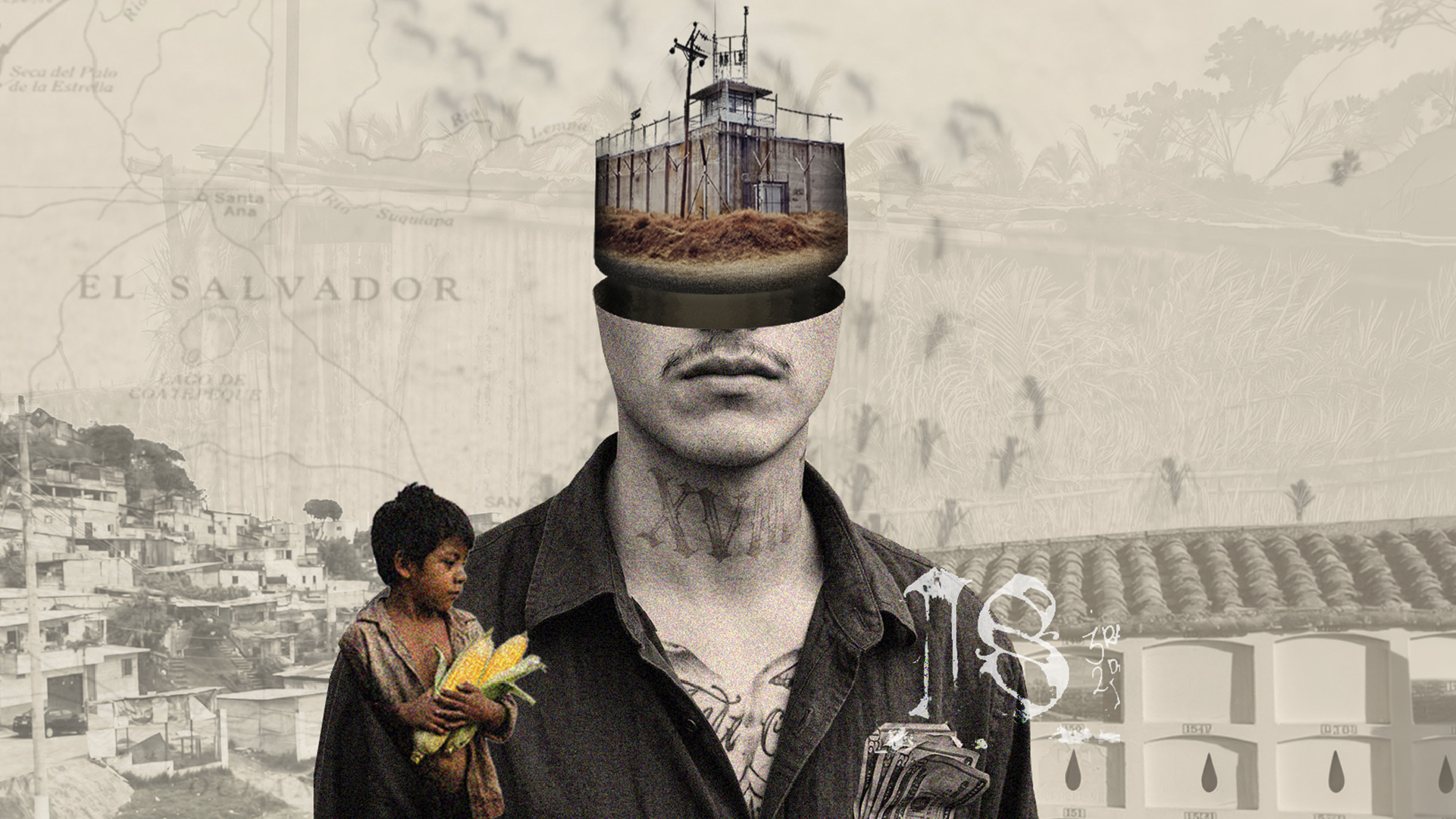
El palabrero. Part 1: The Secret Agent | Translation
Share:
► Click here to return to the episode official page, or here to see all the episodes.
♥ We live in difficult times. We are a non-profit media, and our permanence depends on listeners like you. If you value our work, join Deambulantes, our membership. Help us elevate Latino voices and tell the story of our communities. Your contribution is directly invested in our journalistic work and makes all the difference.
►Do you listen Radio Ambulante to improve your Spanish? We have something extra for you: try our app, designed for Spanish learners who want to study with our episodes.
This podcast is the property of Radio Ambulante Studios. Any copy, distribution, or adaptation is expressly prohibited without prior authorization.
The following English translation was generated with the assistance of artificial intelligence
[Daniel Alarcón]: Before we begin, a warning: this episode contains explicit scenes and language. Listener discretion is advised.
This is Radio Ambulante, I’m Daniel Alarcón.
Today’s story begins with a phone call in March of 2023.
[Rafael]: Hey there, hey… Boss?… Hello, hello?
[Daniel A.]: The one saying hello is a Salvadoran gang member. A veteran, a leader of the Barrio 18 gang. We agreed to protect his identity. So we’ll call him only by his first name, Rafael. But he’s better known in the gang as Rafa, or Chafa.
[Iván]: Hold on, let me get comfortable here.
[Rafael]: Yeah, I can hear you settling in.
[Iván]: Yeah, yeah, yeah.
[Daniel A.]: On the other end, a police officer. At that point Rafa doesn’t know his real name — he only knows him as Chief Iván. It’s a pseudonym he uses to protect his identity.
[Iván]: How are we doing?
[Rafael]: Getting by… we’re getting there, we’re getting there… My device hadn’t come in yet, that’s why I hadn’t been able to get any… any signal…
[Daniel A.]: Chief Iván wants Rafa to do something for the police of El Salvador. He wants him to capture another gang member and hand him over. Alive. They’ve been in indirect contact for a few weeks now, and in this call they’re hoping to strike a deal. This is Chief Iván:
[Iván]: Look, let me get straight to the point — I’ve got three pieces of information for you, and I also want to hear two pieces of information from you, right? That’s what they’re asking of you, the boss.
[Rafael]: Let’s do it.
[Daniel A.]: The gang member Rafa has to capture isn’t just anyone. At the time of this call, he’s the most wanted man in El Salvador. His name is Elmer Canales Rivera, but they call him Crook. He’s one of the top leaders of the Mara Salvatrucha, or MS-13.
Rafa is asking for a payment of thousands of dollars. And Chief Iván says that’s possible.
But something else matters more to Rafa.
A few weeks earlier, the police of El Salvador had arrested his sister. A mother of three, a worker at a grocery stall in a market, someone who had never been involved with gangs and had no criminal record. An arrest that was arbitrary by any measure, made possible by the state of exception that Nayib Bukele’s government put in place on March 27, 2022, under which police can detain you without a warrant, simply on suspicion that you’re doing something illegal.
But Chief Iván, on behalf of the police, is willing to send the order to release Rafa’s sister if he agrees to the request and hands Crook over alive. It’s a high-risk mission. And Rafa is well aware of that.
[Rafael]: You already told me that if I end up dying at the start of this whole mess, old man… that’s what we said, that’s what we agreed: don’t touch my family, and let my mother be able to bury me properly. Right, you understand me?
[Iván]: If that’s clear, there’s no problem.
[Rafael]: Right.
[Daniel A.]: Today, the story of a backdoor negotiation between a government representative who promised to wipe out the gangs in El Salvador, and a gang member who wants to save his family.
This episode is a co-production with El Faro and was reported by Óscar and Carlos Martínez and produced by Luis Fernando Vargas.
Carlos tells us the story.
[Carlos Martínez]: Rafa contacted me a few months after the call you just heard. He told me he had a story that might interest me. That it was legendary. It was the story of how that call came about, and what happened afterward.
Because of our work at El Faro, we’ve been in contact with Rafa since 2012. That was the first time negotiations were attempted between the government of El Salvador and the gangs to bring down the murder rate. This in exchange for favors for the imprisoned gang leaders. Rafa took part in that process — he was a spokesman for his gang — and something became clear to him…
[Rafael]: Honestly, brother, of all the human beings I met in politics, I couldn’t tell you a single one who was qualified for the position they held. Just people who don’t measure up to a damn thing. Disconnected from the real world, truly.
[Carlos M.]: Rafa is a man with a quick, charismatic, analytical way with words… When you talk to him for more than a couple of hours, it becomes clear how he rose so far in the gang, all the way to becoming a leader. He doesn’t look like the typical gang member. His sparse mustache, reminiscent of Cantinflas, and his loose clothing — more for comfort than for style — clash with the image of other leaders of these groups. Like other gang members, he has tattoos from his criminal organization, Barrio 18. But he keeps them hidden under his clothes. He also has a bullet wound in his chest. Rafa knows violence well — he lived through it as a child, and inflicted it as an adult.
Rafa’s story is the same as that of thousands of children in postwar El Salvador: young people forgotten in a country broken by a bloody conflict. Young people who were seduced by the gangs and the power they promised.
Rafa was born in the early ’80s, in the department of Santa Ana, an hour from the capital. His family: a sister and his mother. His mother also took in two cousins. About his father, he only knows rumors. His mother told him he’d been a police officer, that he’d gone off to the United States. Rafa is only sure of one thing: he never helped them. Those were the years of civil war… Leftist guerrilla groups clashed directly with the armed forces. El Salvador had endured decades of repression under military governments, and the people were deeply impoverished.
The civil war was a devastating conflict that left close to 75,000 dead, and enormous numbers of the disappeared and displaced. Santa Ana was one of the battlegrounds. And Rafa and his family lived through all of it up close. Rafa remembers the attack that forced them to leave. A bomb planted by the guerrillas.
[Rafael]: We fled the war. They blew up the model house of a housing development in Santa Ana. We lived nearby. They blew it up with a bomb. The fighting broke out right outside our house. We fled.
[Carlos M.]: A clash between soldiers and guerrillas. Bullets and bodies right outside his house.
They moved to a rural town with few opportunities. Life was hard from the start. Day to day went by without even the basics: no electricity, no running water.
[Rafael]: We lived a kind of poverty you can’t imagine. We had to go haul water. I’d get up at 6:00 in the morning, run over there, bathe in a river, come back, get dressed, and have to put plastic bags over my shoes up to my knees to get to school through the mud. So much mud.
And the hunger…
[Rafael]: A hunger you can’t imagine — I think it taught me more than life itself did. Right? At seven, eight years old, I was already able to negotiate with a woman who sold tortillas and boiled beans, to get her to let me have tortillas and beans on credit for 14 days, so my mom could pay her at the end of the pay period.
His childhood was split between school and work. Rafa did whatever was necessary to help his mom make it to the end of the month.
[Rafael]: I’ve done a bit of everything, from hauling sand out of a river to sell, digging up rocks from the ground to sell them, going to gather firewood and selling the firewood. And damn it, I’ve done whatever I had to do from a young age, 7 or 8 years old, maybe.
[Carlos M.]: There was no time, no energy, and no money for anything else. And even so, the work was never enough. His first crime was a theft: firewood someone else had already cut for cooking, which he could sell for more. He didn’t even have a tool to cut the wood he found himself.
His second theft was some corn. At that point, his crimes had one explanation. Hunger. Simply hunger.
Rafa felt invisible. As a teenager he worked at an upholstery shop in the morning, and studied at school at night. School was his mother’s eternal demand. But he felt it was a cycle that led nowhere. He was still poor, still excluded. He was still nobody in a world of nobodies.
Rafa’s generation grew up understanding life as a fight to the death between rival sides… This despite the fact that the civil war had ended years earlier, after the signing of the peace accords in 1992. That was the logic through which they understood the world.
And by the end of the ’90s, they found themselves in a kind of limbo: a destroyed past and a future that promised nothing. It’s no surprise that when the gang arrived in Rafa’s life, and in the lives of dozens of boys like him, the promise of power and money the gang offered against such a brutally difficult life was appealing.
In 1999, at 15 or 16 years old, Rafa joined the Barrio 18 gang. It was a clica, meaning a cell of the gang, relatively small, of about 75, 80 people… They were all boys like him, with no job prospects and mired in poverty. Turning to crime to make quick money, to feel powerful, to gain status, respect. To be someone. From the start, it was the same for him as for everyone else. For Rafa, it became his place immediately. But it was a clica that was just getting started…
[Rafael]: It was the stage when we didn’t even really know what the gang was. We didn’t know where it came from, why, what it was, nothing. In fact, we didn’t even know how to do the greeting properly, the way the gang required. The rulebook didn’t cover that. We didn’t know anything about the rulebook.
[Carlos M.]: In gangs there are rites, rules, hierarchies, punishments for mistakes. These things are laid out in the rulebooks the leaders impose. It’s a mandate on how things are supposed to work. But at the moment Rafa joined Barrio 18 in El Salvador, none of that was defined yet. That would come later, and he would be one of the people in charge of enforcing it.
The Barrio 18 gang that Rafa found in 1999 was different from the massive criminal organization that would go on to have as many as 22,000 members, financed by businesses like drug dealing, money laundering, and extortion.
Rafa’s Barrio 18 was smaller, less organized. It had only existed in El Salvador for a few years. The gang, in fact, was formed in the mid-1950s, as a group that split off from an even older gang in Los Angeles, California. Later, in the early ’80s, it became the first gang of Mexican descendants to accept members from other countries, and over time, young people from Salvadoran families who had fled to the United States to escape the war began to join.
In an attempt to stamp out youth crime, in the ’90s the United States deported many of these gang members to their home countries, and that’s how Barrio 18 and Mara Salvatrucha 13 began operating in El Salvador.
By the time Rafa joined, Barrio 18 was understood to be a gang. But the culture, the identity, the rules within the group weren’t clear. There was no structure. But that didn’t mean they weren’t living a criminal life. Crime was there from the beginning. Rafa admits to some of it; with other things, it’s more ambiguous.
[Rafael]: Sure, at some point I’ve had to shoot someone. Whether they died or not, I don’t know — I couldn’t confirm that for you, right? Other crimes, yes. I’ve sold drugs at some point, yes. I’ve extorted someone, yes. You understand me, right? I mean, I can’t tell you I lived in that world and never did anything. Of course at some point I did — of course I did.
[Carlos M.]: And as we said at the start, Rafa quickly stood out in his clica. It was his charisma and intelligence in a complex, violent world. He was also disciplined.
[Rafael]: I worked during the day, studied at night. There was very little time left for me to be a gang member. I had from one-thirty to two. At lunchtime I preferred to be a gang member, I’d leave work, then go back to it. At 5:30 I’d get ready to be a gang member from 5:30 to 6:15. Then I’d go to school. I was a student — I can’t tell you if I was the best or the worst, but I was a student. And then after 8:30, until 9:15, which was the latest my mom would let me stay out, I went back to being a gang member. Saturday and Sunday, gang members 24/7. Right.
[Carlos M.]: He clearly remembers a conversation he had a few years after joining Barrio 18, around 2000 or 2001. That conversation set the course he’d follow in that world for the decades that followed. It was with a man famous in criminal circles, and really, in all of El Salvador: Carlos Ernesto Mojica Lechuga, “el Viejo Lyn,” the top leader of Barrio 18. One of the gang members who came up in Los Angeles and was deported. El Viejo Lyn visited Rafa’s town. The kid had met him briefly before. To him, he was a legend. So one day, after school, still in his uniform, he went to see him, to ask his advice. What he told him stuck with Rafa:
[Rafael]: Look. Come on, sit down. Never, ever drop out of school. Go as far as you believe you can go. As far as your chances will take you. Never, ever stop studying. Keep going, and read. Read any damn thing. And most important, read the laws. Read the Constitution. The Criminal Procedure Code. You’re a criminal. You have to know about that. Because that’s how they’ll come after you. This is what defends you. This is what judges you. Ah, alright, okay.
[Carlos M.]: Over time, Rafa would become one of the men who helped el Viejo Lyn turn Barrio 18 into a powerful gang.
[Daniel A.]: A short break, and we’ll be back.
[Daniel A.]: We’re back on Radio Ambulante. Here’s Carlos.
[Carlos M.]: Rafa finished high school. Maybe more out of his mom’s insistence than el Viejo Lyn’s advice. But to his mom’s and younger sister’s misfortune, Rafa decided to sink deeper and deeper into Barrio 18. He liked the sense of power and fear that came with being inside — something that can also be mistaken for respect. He liked the clothes, the chains, the tattoos… It was more appealing than an honest, low-profile job.
Until 2003, gang violence wasn’t something authorities paid much attention to. It mostly affected the poor, but the criminal groups were starting to expand and become a real problem for a large part of Salvadorans.
The government’s response was a plan with a blunt, to-the-point name: Mano Dura, or “Iron Fist.” For the president at the time, Francisco Flores, up until that point the governments of El Salvador had been far too lenient with the gangs. Here he is at a press conference in 2003, announcing the new security plan.
[Francisco Flores]: I am convinced that this passive attitude, one that protects criminals instead of protecting citizens, must come to an end.
[Carlos M.]: The Mano Dura policy led to the arrests of young gang members, often without the evidence necessary for a viable legal case, and with a brutality not seen before.
Among those captured were also several gang leaders who, from prison, established the way decisions would be made within the gangs for years to come. That’s where “cúpulas” formed — leadership councils that functioned like boards of directors for gang leaders. Those cúpulas wrote the rulebooks that define how the gangs operate, something that didn’t exist when Rafa first entered this world… It was the transformation of clicas made up of young people with little idea of what it meant to be a gang member into criminal structures with hierarchy, order, procedures…
[Rafael]: Then came the stage where we needed guns, because when we started, I’m telling you, there were 70 of us, but there wasn’t a single weapon, not one. Whoever was doing well carried a homemade shotgun, you know? Then came maybe the worst stage of all, which was getting involved in what became extortion, the “renta.” That’s maybe what brought the most contempt on us, I think, but it was a necessary evil, because we had to fund the operation.
[Carlos M.]: By “the operation,” Rafa means the running of the gang. Extortion, known as “la renta,” was the great criminal leap these groups took in El Salvador: the reason for their rapid expansion and takeover of territory. If you know anything at all about how the maras operated in the country, you’ve probably heard these stories more than once.
Stories of shopkeepers, owners of little stores or restaurants, who, in order to work and open to the public, had to pay a monthly or weekly amount to the gang that had taken over their neighborhood. Or of delivery trucks that, to be able to enter an area and sell their goods, also had to pay the criminal group. Or of people who, simply for living in a neighborhood controlled by a gang, had to pay extortion under threat of beatings to a family member or to themselves. Often it was a matter of “pay or die.”
When holding territory translated into higher income, war between gangs was inevitable: taking a block or an area from the enemy could mean a lot of money. The crossfire intensified and spread across the country, one where more and more Salvadorans were caught in the middle every day.
Mano Dura was, more than anything, a publicity strategy, not a measure grounded in real knowledge or research on how to solve the problem. That’s why it failed. Homicides went up. And the following year, 2004, the new government rolled out a new program: “Súper Mano Dura,” or “Super Iron Fist.” That didn’t solve anything either. And again, there was more killing.
During those years, Rafa traveled across El Salvador with one goal: building up his group.
[Rafael]: I know a good part of El Salvador. Maybe I wouldn’t know it the way I do today if it weren’t for that. You’d go visit places where the gang was weaker, go see what they needed help with, hold a meeting. There, lay out the rules of the barrio, because, I mean, it wasn’t like everyone already had them. You had to go show them: here’s how it is, here’s what applies to you. This is how it works, this is how it goes. If you break this rule, this is your punishment. If you do this, this happens — you understand?
[Carlos M.]: In other words, giving orders, making the rules clear: the chains of command, the consequences. That was no small thing.
It was in that context that Rafa became “Palabrero,” the national spokesman-leader of Barrio 18. Palabrero is a way of referring to a gang leader, someone high-ranking, in charge of the clica or cell in a specific place. Rafa was a level above that. The clicas reported to him, and he, in turn, was in constant communication with the gang leaders in prison. It was a position of great power.
The year 2011 closed with 4,308 homicides, a rate of 65 murders per 100,000 people — one of the highest in the world at the time. The lives of some 6 million Salvadorans were completely affected, and violence had become part of daily life — how you behaved on the street, what you factored into your decisions…
For many people, simple acts like visiting a family member or friend who lived in a neighborhood controlled by a different gang than the one in your own neighborhood was a death sentence. Many of the homicides had little to do with the war being fought over territorial control between gangs. Sometimes people were killed over things as insignificant and absurd as something that had angered a gang member, or as part of an initiation ritual into the gang.
[Rafael]: All of this spiraled into a situation that, sure, gave you power without you even realizing it, but damn it, it also took something from you on the inside, and there comes a point when what’s inside weighs more, and you start to see that well, yes, if it’s true that at some point you got in because you wanted the adrenaline of an enemy on your level that you were going to go head to head with, damn it, but then there’s the girl who has nothing to do with any of it.
[Carlos M.]: There were thousands of collateral victims. People who had nothing to do with the gangs. The governments that led the country through the 2000s failed to control the violence. And in 2009, for the first time, a left-wing government came to power that gambled on negotiating with criminal groups to reduce homicides and maintain the sense that the rule of law still held in El Salvador.
At Radio Ambulante, we’ve told the story of that first negotiation. The episode is called “La Tregua” (“The Truce”), and you can listen to it to understand more about that period. But it’s worth pausing here, on how that rapprochement between governments and criminal groups came about, to better explain what’s coming in Rafa’s story: the fact that a police officer would call him and negotiate with him over the capture of a rival gang’s leader, entirely in secret, under the table.
In short, that first truce in 2012 substantially reduced homicides. Mauricio Funes’s left-wing government understood that negotiating was the only viable path. But it was also political suicide. The public hated the gangs, hated what they were doing to the country. Negotiating with them would be a completely rejected move, the kind that could cost you an election. So they decided to do it in secret, with the Catholic Church as intermediary.
Rafa was among those who watched this process with hope. He supported it.
[Rafael]: We felt a real possibility that it could actually happen. We did see that things were heading in a good direction…
[Carlos M.]: The drop in violence was achieved in exchange for transferring gang leaders to lower-security prisons and granting them benefits within the penal system. But of course, that wasn’t the only thing they were after. When you want control and power, working your way into politics is useful. That closeness with the government was something they needed.
That first truce worked for a while. But the secrecy in which it was negotiated, along with the upcoming presidential elections, led to the government failing to honor the agreements it had made. The gangs felt betrayed, and, as a show of political force, violence increased.
By 2015, with the truce a thing of the past, there were more than 6,600 homicides. A rate of 106 murders per 100,000 people. It was brutal. El Salvador became the country with the highest homicide rate in the world.
For Rafa, there was no turning back from that violence.
[Rafael]: So seeing how catastrophic and inhumane it all became, it wasn’t pleasant, and not for anyone, I think, and you just had to accept it and grit your teeth for whatever came next, that’s all.
[Carlos M.]: He means there was no choice but to accept the consequences of his actions. With the scale of violence in 2015 and the year after, and the investigative reporting we published at El Faro exposing the truce, the government came down hard on the gangs. It was a way of denying that there had been any pacts with criminal groups. The arrests of leaders who were still free began. Rafa was among them. In 2016, an arrest warrant was issued against him for extortion. Rafa disappeared from the streets.
[Rafael]: Honestly, everybody thought I’d been out of El Salvador for a long time already. We always used Mexican phone numbers. But really, I was in El Salvador the whole time, the whole time.
But confined to a house where his power felt useless. Meanwhile, out on the streets, innocent people and his own subordinates were dying.
[Carlos Martínez]: Do you feel responsible, by that same logic, for the atrocities your structure carried out on the ground?
[Rafael]: At every moment, man. Even though its logic was violent, maybe from the very first day it was formed. Yes, but not to go do those things. Damn it! Imagine, dismembered girls, brother, damn. And my daughter, how old is she? Fourteen, man. And some sick lunatic does that to her just because he felt like it? And that’s the reason? No, man, it’s not.
[Carlos M.]: Rafa brought up that dismembered girl several times. He wasn’t the one who did it. It was one of his subordinates, but it seems to be one killing, among thousands and thousands, that stayed with him. It’s the sheer violence of the act: a gang member who killed and violated the body of a young woman, completely dehumanizing her, just because he could.
Rafa spent six years in hiding. Until 2022, when the state of exception under Nayib Bukele’s government began — one that continues to this day. Bukele’s government, like the two before it, negotiated with the gangs from the moment it took power in 2019. It granted benefits to gang leaders in prison and released gang bosses in exchange for a drop in violence and support in the legislative elections. But three years later, in 2022, the deal fell apart. The government detained members of Mara Salvatrucha who had safe conduct, and in response, the gang caused one of the most violent periods of the 21st century in El Salvador.
[Archival sound bite]
Canal 12/El Salvador
[Reporter]: El Salvador may have just lived through its darkest days in years.
Noticias Telemundo Mediodía
[Reporter]: Saturday became the most violent day in the history of El Salvador after 62 deaths were reported.
Noticias Telemundo
[Reporter]: The main streets of the city and several communities besieged by gangs in El Salvador woke up this Sunday surrounded by police and soldiers after a state of emergency was declared.
[Carlos M.]: There were 87 murders over three days that weekend. That same Saturday, the government declared the state of exception, which is basically a mechanism used by many states to deal with things like natural disasters, military invasions, or some other event that disrupts public order across the entire country.
Under the state of exception imposed by El Salvador’s government, you, as a citizen, lose institutional guarantees — that is, rights. And the armed forces and police gain unchecked power. They can tap your private communications to gather information, or arrest you for being with a group of people… Or they can arrest you without explaining why, and you have no right to defend yourself in court.
The idea behind a state of exception is that it be exactly that: something temporary, outside the norm. But, as we already said, it’s still in place. We’re four years in, and it keeps getting extended month after month.
And with this measure, mass arrests began. These created the conditions that made possible the arbitrary capture of Rafa’s sister, and led us to the call we heard at the start, between a criminal and a police officer.
[Archival sound bite]
Noticias Telemundo
[Reporter]: More than 600 gang members have been detained across El Salvador in the first two days of the state of exception.
Canal 12/El Salvador
[Reporter]: In the last few hours, at least 487 people have been detained.
Canal 12/El Salvador
[Reporter]: The PNC announced that in recent hours more than 500 people were detained, and that over the more than 20 days of the state of exception, more than 13,000 detentions have already been reported.
[Carlos M.]: The first year of the state of exception ended with more than 60,000 detentions. What was happening in El Salvador during those days worried human rights groups and opponents of the Bukele government. Especially because cases began to surface of people who were arrested for how they looked or for something the police considered suspicious. All without the right to a trial.
But the state of exception was also effective and very popular with Salvadorans. That first year, the gangs were seriously wounded in the country. The eternal problem, the one that felt impossible to solve, was being solved. Bukele won the next presidential election in a landslide, with 85% of the vote, even though his candidacy was unconstitutional. Today he remains the most popular president in Latin America.
Rafa lived through all of this in hiding in a house, with no clarity about what was really happening. The gang’s leadership council in prison stopped communicating.
[Rafael]: Communication kept fading, kept fading, and you were just left there, and no one told you what to do. So what do I do? Nothing. Do you leave, do you hide, or do you stay and wait for instructions? The silence got to the point where Rafa understood it to mean every man for himself.
He stayed hidden for 9 months, but the state of exception was spreading across the whole country. The military was deploying to the areas with the most crime in the country, in operations known as “cercos,” or blockades. He thought it wouldn’t be long before they caught him.
[Rafael]: So, in my thinking, the day I ended up caught in the middle of one of those blockades, all those years of being careful would have been for nothing, just to get caught in a blockade in the town where I was living at the time. It was in December that I made the decision. There were contacts, there could keep being contacts. I decided to get out.
[Carlos M.]: It was December 2022. Rafa called some of his contacts and asked for help getting out of the country along with his partner and his daughter. A few days later, a coyote took them to Guatemala. There, he settled in a small town. That would be his new home. It felt like breathing again. But he still tried to keep a low profile, to draw as little attention as possible.
[Rafael]: Not get into trouble and try to make friends. As little or as much as I could. Being from somewhere else, taking precautions.
[Carlos]: Didn’t you use your knowledge of the criminal world to move coke, move drugs, and make some cash?
[Rafael]: Well, look, I can’t deny it, because at some point it was a way of surviving — you knew people, and you had to survive somehow. And yes, I did what I had to do to get by.
[Carlos M.]: Over time, with his wife’s help, he opened a pupusería. They started to socialize. Rafa felt good. There was a kind of normalcy after 7 years of hiding. His power and influence as a Barrio 18 leader were starting to feel like something that had happened in another life.
On January 30, 2023, more than a month after leaving the country and settling in Guatemala, Rafa got a call informing him that the police had just arrested his sister.
[Rafael]: God, man! I felt like the floor dropped out from under me. It’s one of the saddest moments I’ll remember in my life. There have been several moments at different points in my life, but I knew what I was about to go through, and, well, damn it — now what?
[Carlos M.]: Rafa kept his distance, mostly to avoid dragging her, his nephews, or his mom into it. He’d always worried about his family’s safety, and he knew right away they’d taken her because he was a gang member. Rafa understood clearly that, under the state of exception, the chances of ever seeing his sister again were basically nil. In the prisons, people suspected of ties to gangs can’t see family members, or have any kind of legal defense.
Rafa called his mom, who kept pushing for a lawyer.
[Rafael]: I told my mom, yes, that everything was fine, but I mean, I knew a lawyer was a lie, but so as not to take away her hope, her will to fight, I said, let’s do it.
[Carlos M.]: But really, he was focused on something else: making things as bearable as possible for her in there. They’d put her in a cell with other women, but none of them gang members. That was good news. There was more flexibility there when it came to sending her food and hygiene products.
[Rafael]: So I told my mom, look, mom, honestly right now what we can do is make sure she doesn’t go without anything, anything — whatever is possible, because in there, whatever’s possible is a treasure. If they allow a bar of scented soap, we give her the scented soap. That’s valuable. That matters. That gives her a better life there.
[Carlos M.]: That’s what they did. Over the following days, Rafa’s mom went to the prison to leave her food, a mat, things to help her hold on, while he figured out what to do.
The truth is, Rafa had absolutely no idea how to solve the situation. He felt like his hands were tied. He tried some contacts, but nothing. Until one call changed everything.
[Daniel A.]: A short break, and we’ll be back.
[Daniel A.]: We’re back. I’ll leave you with Carlos.
[Carlos M.]: The call Rafa got shortly after his sister was arrested was about a business deal, and it came from an old acquaintance. His name: Kevin Genovés. Rafa had known him since childhood. Kevin was younger than him, and at one point they’d been close. He wasn’t exactly part of the gang — he was part of a network of coyotes who moved people illegally across the border between El Salvador and Guatemala.
[Rafael]: And there comes a moment when Kevin tells me, look, man, there’s a deal, but I don’t know what you’ll say. Ah, tell me about it, I said. What’s going on? Look, he told me, here’s how it is, Chicho has a contact. And I’ve been working with Chicho and we’ve tried to catch Crook and we have no idea where or how.
[Carlos M.]: Okay. There are two more names here that need some explanation. We’ll get back to the call. One of the names is new: Chicho. Chicho is what people call José Narciso Ramírez Ventura, the former mayor of the municipality of San Francisco Menéndez, who governed for nearly 20 years. But he also ran an illegal human-trafficking business.
Then there’s the other name: Crook. You might not remember, but we mentioned him at the start of the episode, when we talked about the negotiation call between the police officer and Rafa. Elmer Canales Rivera, alias Crook, was the gang member Rafa was supposed to capture. The most wanted man in El Salvador.
Crook was part of the “ranfla,” the leadership of the MS-13 gang, Mara Salvatrucha, the rival gang to Barrio 18, Rafa’s gang. He had been in prison since the early 2000s, and from there, along with other leaders, he controlled the massacres that took place in El Salvador for more than two decades.
In 2020, Crook was finally convicted of two homicides and other charges. He was supposed to serve 40 years in prison. In June 2021, the United States requested his extradition. It accused him of conspiring in several matters: providing material support to terrorists, financing terrorists, and conspiring in narco-terrorism activities, especially because of his ties to cartels in Mexico.
But just a few months later, in November 2021, despite the extradition order, Crook was secretly released by Nayib Bukele’s government. This happened as part of the under-the-table agreements made between the Bukele government and the gangs before the state of exception was declared.
At El Faro, we published investigations confirming that Crook was taken from prison to the border with Guatemala by a high-ranking government official, the director of the Office for the Reconstruction of the Social Fabric, who was also the government’s spokesperson to the gangs. Nayib Bukele’s government has never addressed the matter.
Some sources claimed Crook was in Mexico, under the protection of the Sinaloa Cartel, with whom his gang, MS-13, had done business.
Now, more than a year after releasing him, the government of El Salvador wanted to capture Crook again.
Why did they want him back? Well, Crook was living proof of the illegal pacts between the Bukele government and the gangs. He could provide information about the negotiations that had been made under the table — something the government has always denied. On top of that, the government maintained the story that it had never released a single gang member. If Crook revealed anything about the negotiations, the government’s popularity could take a hit, and elections were coming up soon. There was also another factor: capturing Crook secretly and then showing him off publicly would give Bukele’s government a chance to discredit those of us who had made public its pacts with the gangs, including the illegal release of Crook.
That’s why capturing him was a priority.
Now, let’s go back to the call we mentioned a moment ago, between Rafa and his childhood friend Kevin Genovés. Kevin, along with Chicho — the former mayor — hadn’t managed — or hadn’t wanted to, we don’t know — to find Crook. This is what Kevin told Rafa when he called.
[Rafael]: We’ve tried and we haven’t been able to. Do you think you can? It’s possible I can, I told him. Ah, look, I told him, let’s do this. You tell Chicho my sister is in prison. Help me get her out, and then we’ll talk. Alright, he told me. Take it, take it.
[Carlos M.]: Chicho was in contact with police officers. At a meeting Chicho and Kevin had with them, they talked about Rafa and his request: that he was willing to capture Crook if the police released his sister. The proposal interested them. They wanted to negotiate with Rafa. That’s how they got in touch with Chief Iván — the one we opened this episode with, on a call with Rafa. He would coordinate the whole operation.
As a show of good faith, Chief Iván arranged a meeting between Rafa’s mom and his sister. Rafa gave his mom the news.
[Rafael]: My mom was deeply suspicious. How could that be possible? What’s going on? No, mom, nothing’s going on, don’t worry, just let things flow, just get ready, go on, bring her food, bring the kids, bring her this.
[Carlos M.]: His mom knew absolutely nothing about the conversations her son was having with the government. Kevin was the one who took her to see her daughter. Her grandchildren went with her. They met in a park in San Salvador on March 14, 2023, almost a month and a half after Rafa’s sister had been arrested. They hugged for a long time and talked. At one point, one of the officers spoke to the mom.
[Rafael]: And then they tell my mom: Look, she’s not going back to prison. From this moment on, she’s with us.
[Carlos M.]: In other words, Rafa’s sister was going to stay with the police. They’d keep her in a safe house. The officer added…
[Rafael]: You can buy her little bits of food, little things she hasn’t been able to eat. I mean, if there’s a way to make her a little meal, cook something. If she wants some soup, buy her what she needs, there’s no problem.
[Carlos M.]: He also said something else…
[Rafael]: Ah, look, this guy — he doesn’t inspire trust. He meant Kevin. He’d been assigned to represent your side, but he doesn’t inspire trust in us. Tell your son to call me. He knows this is better. Keeping things airtight is better.
[Carlos M.]: Keeping things airtight, with no middlemen. No Kevin, no Chicho. Just between the police and Rafa.
The meeting that took place in that park, between Rafa’s sister, her children, and her mom, is completely unbelievable if you look at what’s happened over the last four years in El Salvador. A country under a permanent state of exception. Those who are arrested are never allowed to see a lawyer or their family members.
Kevin took photos of the meeting and sent them to Rafa. He also explained the deal. Rafa felt some relief knowing she was alive and in good health, but also anger and worry.
[Rafael]: Damn it! But in my mind, of course, we’re going to get her out and put her in a safe house. It’s the same shit. I mean, still being held.
[Carlos M.]: Even though Chief Iván was keeping his word, Rafa didn’t feel his family was out of danger.
When his mom told him the police wanted to cut Kevin out of the loop and talk to him directly, Rafa was reluctant. He didn’t want to create a direct line of communication with Nayib Bukele’s government, but at that point it seemed like the only way to guarantee his sister a way out.
And that’s how, in March 2023, the conversation we heard at the start of the episode takes place.
[Rafael]: Hey there, hey… Boss?… Hello, hello?
[Carlos M.]: In it, Rafa negotiates directly with Chief Iván over capturing Crook in exchange for the police releasing his sister. Rafa is asking for 6,500 dollars to get started, as expenses, and in that call he presses Chief Iván to release his sister. Chief Iván asks him to communicate more consistently. Here’s an excerpt from the call.
[Chief Iván]: We’re giving you the first thing that’s already settled, your relative, we’re giving her mobility, which is the least you’re asking for…
[Rafael]: Yes.
[Chief Iván]: So, they’re asking me to tell you, right, that between what’s given for expenses and what happens with your sister, there has to be a proof of good faith. What can you give us?
[Rafael]: What do you want?
[Chief Iván]: No, you tell me what you’ve got.
[Carlos M.]: A proof of good faith — in other words, something that would show trust, that he was going to follow through. Like what Chief Iván had given with the meeting between Rafa’s mom and his sister. Here’s what Rafa said at that point.
[Rafael]: What I have, brother, and I want to make this very clear… I’m aware of the mess I’m getting myself into. And I’m aware that if I let you down, my whole bloodline, anyone with any closeness to me, is going to get torn to pieces. I’m clear on that.
[Carlos M.]: Rafa never imagined he’d be in that position: working, under the table, for the government of El Salvador.
[Rafael]: I’m in a situation that’s kind of complicated. I don’t know if you’d call me a mercenary, some kind of employee, like a James Bond, who the hell knows. So, basically I’ve become like a shadow employee of the government. At some point I got to thinking it was the opportunity of my life. Right?
[Carlos M.]: He’d end up with money, with his family okay. And maybe most unbelievable of all, after a life on the margins of Salvadoran society, all of it would come together with the government’s help.
It was a dangerous mission, but Rafa felt it wasn’t impossible to pull off. He had contacts and a plan.
When he hung up, it was time to carry it out.
[Daniel A.]: In the next episode of Radio Ambulante, we’ll hear what Rafa’s sister went through…
[Hermana]: I mean, I wasn’t a detainee, I was a bargaining chip. Whether it went badly or well, I mean, they knew exactly how they were going to use me.
I couldn’t stop crying. I felt like I was drowning. I mean, I was living out what my mom once told my brother: “Someday we’re all going to pay for your decision.”
[Daniel A.]: And how Rafa ended up carrying out his plan.
[Rafael]: Everything went the way the conversation I had with him went, you know? I was listening to him. I had the phone and I was listening to him. At that moment I was scheming what I was going to propose to him and how I was going to propose it.
[Daniel A.]: This story is a co-production of Radio Ambulante with the Salvadoran digital newspaper El Faro. You can find more of their work and support them by visiting elfaro.net.
The episode was reported and written by Carlos Martínez, Óscar Martínez, and Luis Fernando Vargas. Carlos is a journalist on El Faro’s special investigations team. Óscar is the editor-in-chief. Luis Fernando is a senior editor at Radio Ambulante.
The editor is Camila Segura. Bruno Scelza did the fact-checking. Sound design is by Andrés Azpiri, with music by Ana Tuirán, Rémy Lozano, and Andrés.
The rest of the Radio Ambulante team includes Paola Alean, Adriana Bernal, Aneris Casassus, Diego Corzo, Emilia Erbetta, Camilo Jiménez Santofimio, Germán Montoya, Sara Selva Ortiz, Samantha Proaño, Natalia Ramírez, Maira Reina, Juan Pablo Santos, David Trujillo, Elsa Liliana Ulloa, Franklin Villavicencio, and Mariana Zúñiga.
Carolina Guerrero is the CEO.
Radio Ambulante is a podcast from Radio Ambulante Estudios, produced and mixed on Hindenburg PRO.
If you liked this episode and want us to keep making independent journalism about Latin America, support us through Deambulantes, our membership program. Visit radioambulante.org/donar and help us keep telling the region’s stories.
Radio Ambulante tells the stories of Latin America. I’m Daniel Alarcón. Thanks for listening.