
Red T-Shirt, Blue Jeans | Translation
Share:
► Click here to return to the episode official page, or here to see all the episodes.
♥ We live in difficult times. We are a non-profit media, and our permanence depends on listeners like you. If you value our work, join Deambulantes, our membership. Help us elevate Latino voices and tell the story of our communities. Your contribution is directly invested in our journalistic work and makes all the difference.
►Do you listen Radio Ambulante to improve your Spanish? We have something extra for you: try our app, designed for Spanish learners who want to study with our episodes.
This podcast is the property of Radio Ambulante Studios. Any copy, distribution, or adaptation is expressly prohibited without prior authorization.
The following English translation was generated with the assistance of artificial intelligence.
[Daniel Alarcón]: A warning before we begin: this episode contains scenes of violence and explicit language; discretion is advised.
This is Radio Ambulante. I’m Daniel Alarcón.
Today’s story begins on Sunday, January 21, 2007. It was around 7:00 in the morning, and Osvaldo Gómez, 26 years old, was returning from a friend’s birthday party. He was walking, somewhat drunk and sleepy through a quiet neighborhood in Buenos Aires. The street was completely deserted. He only saw a few parked cars and a patrol car, but he didn’t think much of it and kept walking…
[Osvaldo Gómez]: I had already passed the patrol car when they called out to me: ‘Hey, hey.’ When I turned around, I saw a policeman standing there, and he said to me, ‘What are you doing around here?’
[Daniel A.]: Osvaldo explained that he was going to catch the bus, which was two blocks from the stop that would take him home. There was another policeman there.
[Osvaldo G.]: ‘We’re looking for someone like you. Red shirt and blue jeans,’ they told me.
[Daniel A.]: Osvaldo was wearing a red T-shirt and blue shorts with two white stripes on the sides. They were basketball shorts, Nike.
[Osvaldo G.]: I patted him on the shoulder and said, ‘Buddy, these aren’t jeans, they’re shorts,’ I told him. ‘And they’re more white than blue.’ He said, ‘It doesn’t matter. Do you have an ID?’ ‘Yes, I do,’ I gave him my ID. He said, ‘Have you ever been in prison?’ ‘No, no, not at all.’ And he said, ‘Well, we’ll see if you’re lying to me,’ he said, ‘I’m going to run a background check on you.’
[Daniel A.]: One of the policemen pointed to the edge of the sidewalk and told him to wait there. Osvaldo sat down with his back to the patrol car, almost at the corner of the block. Right away, the street started filling up, and about ten people came over to see what was happening. And just a few minutes later, the policeman returned…
[Osvaldo G.]: And he said to me, ‘Are you sure you’ve never been in prison?’ ‘No,’ I told him, ‘neither me nor my family,’ I said. ‘No, never.’ He said, ‘Well, allow me,’ he said, and showed me the handcuffs.
[Daniel A.]: The policeman told him they were going to take him to the police station and that if, as Osvaldo said, he had never been detained, he would be released right away.
[Osvaldo G.]: I was confident and completely sure that I hadn’t done anything. Let’s go wherever you want, take me wherever.
[Daniel A.]: Osvaldo didn’t resist. The policemen handcuffed him and took him away in the patrol car…
[Osvaldo G.]: And that’s where a whole horror movie begins.
[Daniel A.]: A horror movie that would mark him forever.
Our producer Aneris Casassus tells us the story…
[Aneris Casassus]: They transferred Osvaldo to a police station about 10 blocks from where they had detained him. As soon as he entered, they made him leave everything he had with him: a black backpack, his cell phone, keys, wallet. They also asked him to remove the laces from his sneakers. They took him to a very small room with bars, like a cell. It had a minimal opening to the outside through which barely any air could enter, and you could barely tell if it was day or night. The place was empty. There was only a stone bench on which Osvaldo lay down, and after a while, fell asleep. He woke up again to the sound of the bars. He felt them opening…
[Osvaldo G.]: I said, ‘Okay, that’s it, I’m leaving.’ When I was leaving, we went through a little hallway, and they left me in a kind of room where there was a desk and three people.
[Aneris C.]: They made him sit in front of them. The man in the middle was the first to speak…
[Osvaldo G.]: He said to me, ‘Let’s make this short,’ he said, ‘show me the marks,’ he said. I said, ‘Marks of what?’ ‘The marks, show me your arms,’ he said. ‘Yes,’ I said, I showed him my arms. He said, ‘You know why you’re here. Don’t play dumb,’ he said. I said, ‘Yes, for a background check. If I had nothing, they were going to let me go right away,’ I said… And this guy looked at the two on the sides and said to me, ‘You’re here for rape, what background check?’
[Aneris C.]: For rape. No background check.
[Osvaldo G.]: …shirt.’ I took off my shirt. They took pictures of me from the front, from the back. ‘Let’s see. Open your mouth. Stick out your tongue to one side. To the other.’ I said, ‘No, what are you talking about?’ Then I freaked out, I went crazy, I went into a crisis, and I said, ‘What are you talking about? No, what, which arm do you want?’ I said, ‘Look,’ I turned it the other way, I said, ‘What mark, what, what do you want? You want me to take off my shirt?’ ‘Yes. Take off the…’
[Aneris C.]: Osvaldo was in shock but did everything they told him. Then they took him out of that room and pushed him back to the cell. He didn’t understand anything that was happening. Desperate, before the policeman finished closing the bars, he begged them to let him call someone from his family.
[Osvaldo G.]: Then they told me mockingly, ‘We already called your family, but they don’t want to come.’ So I said, ‘I know my family. They’ll be here in two minutes. Let me make one call.’
[Aneris C.]: But they didn’t let him. Osvaldo spent more time in that cell—he can’t say how much; he had completely lost track of time—until he fell asleep again.
[Aneris C.]: At that time, Osvaldo had a seven-year-old son, Tomás. He had recently separated from Carla, his son’s mother, and had returned to his childhood home in Villa Celina, next to the City of Buenos Aires. There were two houses on the same lot where his older brother Roberto lived with his wife and two children, his maternal grandparents, some uncles, and a cousin. His mother had died when he was 17, and his father had started a new relationship and moved to another neighborhood with his two younger siblings.
That day, past noon, the first alarm signal arrived for Osvaldo’s family. This is Roberto, the older brother:
[Roberto G.]: Carla had called us on the phone to ask if we knew about Ova, that he hadn’t come to pick up Tomás, the boy.
[Aneris C.]: It was an appointment he never missed, so Carla found it strange that he didn’t show up, and even more so that he hadn’t even told her he wasn’t coming. Roberto also found it strange. He called some of Osvaldo’s friends to see if they had seen him, but nobody knew anything.
[Roberto G.]: And in the afternoon, the police came to verify if Osvaldo Gómez lived there. Obviously we asked why; they didn’t want to give us information and they told us, ‘No, nothing, just to verify if that person lives here.’
[Aneris C.]: With the police at his house, Roberto confirmed that something was happening with Osvaldo. He went to the police station in his neighborhood. He knew one of the policemen who worked there and asked him to help find him. The policeman called an operations center where accidents and patient transfers to hospitals are reported. But there was no record of Osvaldo there. It was good news, but they had to find him, so the policeman made another call, this time to another police station…
[Roberto G.]: And that’s when I saw his face change, and he told me, ‘Look, all I can tell you is that he’s there at police station 40 in Parque Avellaneda. Go over there and see what information they can give you.’
[Aneris C.]: Roberto didn’t understand what could have happened, but he calmed down a bit knowing where he was. Before taking a taxi to the police station, he bought a Coca-Cola and some sandwiches to take to Osvaldo. It was about a 20-minute trip. When he arrived, it was close to midnight.
[Roberto G.]: After so many hours trying to locate him, that’s where I found him, in a cell.
[Osvaldo G.]: And when I heard the sound of the bars opening and I saw my brother, I got up and said to him:
[Roberto G.]: Please get me out of here, he said to me, get me out of here, help me.
[Osvaldo G.]: Rober, see what they’re doing to me, because I’m tied hand and foot here. They brought me in for a background check. They came out with rape.
[Roberto G.]: I saw his face of desperation. Of knowing that it was such a great injustice that he couldn’t—he couldn’t understand it.
[Aneris C.]: The last thing Roberto imagined when he was on his way to the police station was that his brother was being accused of a crime like that. At most, he thought, he would have gotten into a fight with someone. But never that. The encounter lasted only five minutes. They managed to hug each other as if they hadn’t seen each other in years, and right away, a policeman took Roberto out of the cell.
Roberto asked the officer what was going on.
[Roberto G.]: ‘Don’t worry, tomorrow at noon he’ll be eating noodles with you guys,’ he told me, as if giving me a blanket of security that it wasn’t anything serious.
[Aneris C.]: That calmed Roberto down a bit. He had no doubt about his brother’s innocence; surely it was all a misunderstanding, and they would release him right away.
[Roberto G.]: I stayed calm until the next day at noon when he didn’t come to eat noodles.
[Aneris C.]: Osvaldo spent all of that Sunday night at the police station, and on Monday morning, they put him in a truck, handcuffed again. In front of him traveled a policeman who didn’t take his eyes off him. In one of the seats, he managed to see a pile of folders; they looked like files. They took him to the Courts building, right in the center of Buenos Aires.
[Osvaldo G.]: They took me down and brought me to something they call Mailboxes.
[Aneris C.]: Mailboxes, cells measuring one and a half meters wide by two meters long, completely closed.
[Osvaldo G.]: They threw me in there, closed the door, and it was an absolutely dark, gloomy, cold place.
[Aneris C.]: The cell had a cement bed and a grate in the door through which they occasionally passed him some food. He was there for several hours until a guard came to get him and took him to an office a few floors up. He was received by the judge’s secretary, who gave him the standard information: that if he wanted to testify, he had the right to have a lawyer.
[Osvaldo G.]: And I remember that I told her, ‘Look, I put myself at the service of justice, but I have absolutely nothing to do with what they’re telling me.’
[Aneris C.]: In any case, they told him, they would assign him a public defender. From there, they took him to another sector of the Courts: The Leoneras, large cells where there can be up to 50 inmates in each one. They asked Osvaldo to do something he didn’t expect: to walk down a hallway between those cells and to look carefully at the inmates who were there. And to choose from all of them the ones he thought were, physically, most similar to him.
[Osvaldo G.]: I was so stressed, and the way I was, and with people coming up to press against the bars: ‘Get me out, get me out, get me out, get me out,’ I was dazed. To the point that I told him, ‘No, no, no, I don’t know, man. No, I don’t see anyone like me. You choose,’ I told him.
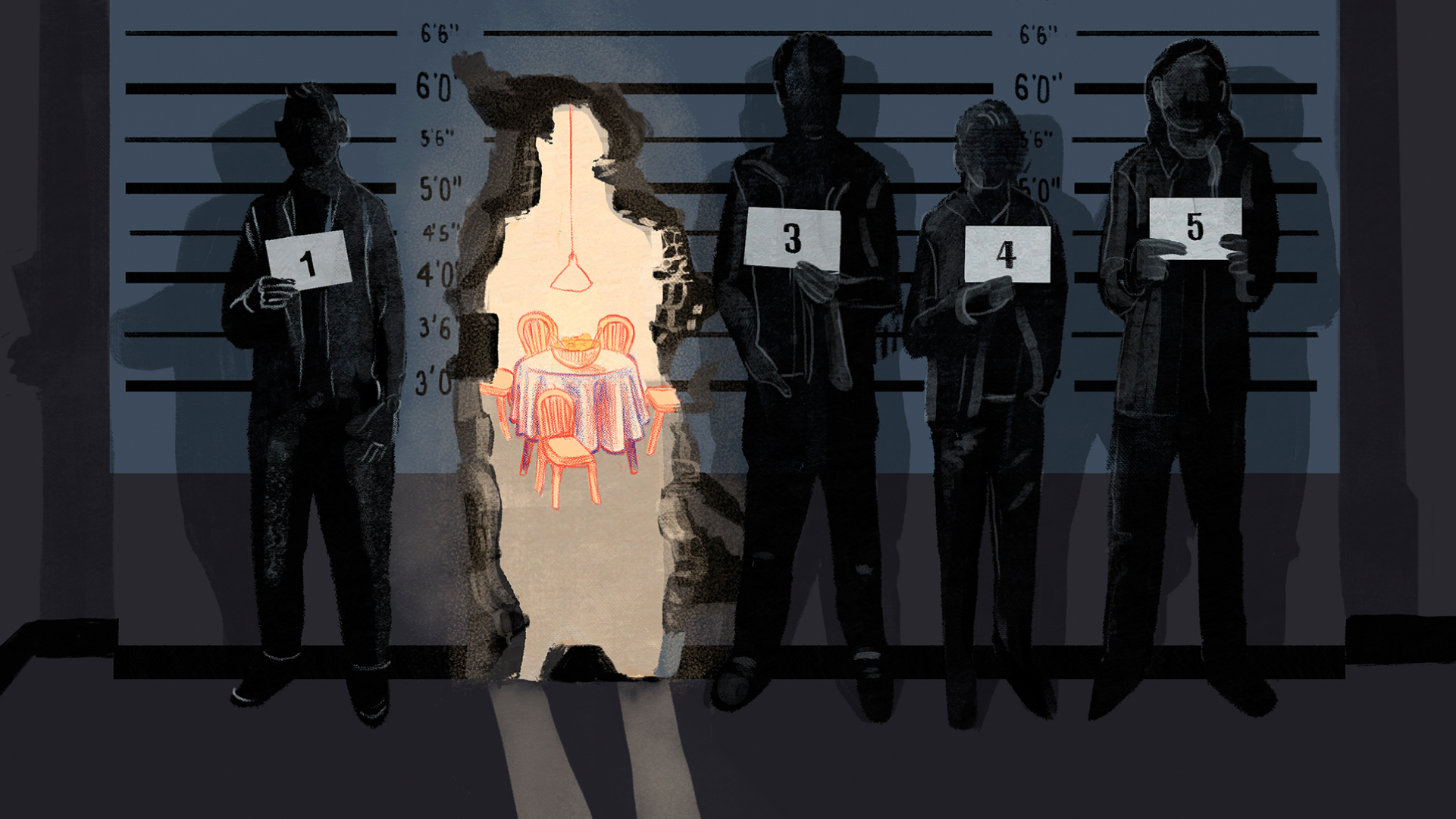
[Aneris C.]: The guard took some men out of the Leoneras and brought them, along with Osvaldo, to another room to participate in a lineup. Each one stood in a place with a number, like in the movies. On the other side of the room, behind a glass, a victim tried to recognize if any of those men had been her attacker. They couldn’t see her, but they could hear the entire conversation she was having with the judge’s secretary.
[Osvaldo G.]: And the girl would say: Ah, no. The truth is a lot of time has passed, I don’t remember anymore, I’m confused, I think it’s none of them.
[Aneris C.]: But the judge’s secretary insisted, telling her to keep in mind that he could have changed his hairstyle, to look mainly at the physical build. So the girl would say she wasn’t sure, but maybe number two… And the judge’s secretary would tell her…
[Osvaldo G.]: Ruling out number two. Which one do you say it could be? And the girl… I was number five, I don’t know. And the girl would say, I don’t know, like number four, like number five. And she would say, And number five? To what degree of recognition do you think? So it was all like leading her to end up choosing the one she wanted.
[Aneris C.]: It was already past noon, and Osvaldo, of course, hadn’t arrived at his house. So Roberto returned to the police station.
[Osvaldo G.]: They told me, ‘He’s at the Courts; the judge summoned him and is going to take his statement,’ they said. ‘When he finishes taking his statement, they’re going to release him.’
[Roberto G.]: All this seemed normal to me, I repeat, from the total ignorance of what a judicial case or a person’s detention process was.
[Aneris C.]: He went back home to wait. But they were far from releasing Osvaldo. That night, they left him in the Mailboxes at the Courts, and the next morning, he participated in more lineups. There were eight in less than two days. He found out then that he wasn’t being accused of just one rape but of many more… There were 17 files in those folders he had seen in the transport truck. Cases from the last three years in which girls between 14 and 16 years old reported being abused in the neighborhoods of Liniers, Mataderos, Floresta, Flores, Parque Avellaneda, Versalles…
[Osvaldo G.]: All those neighborhoods, which is a third of the capital, where there were rape cases, where there was a complaint from someone and the culprit wasn’t found—that case made me a possible perpetrator of those events.
[Aneris C.]: In other words, they were accusing him of being a serial rapist.
[Aneris C.]: Tuesday night—almost three days after his detention—they left him in Mailboxes again, and in the early morning, he heard them opening the bars of his cell. They took him out of the Courts and put him in a truck, handcuffed again. There were seven or eight other inmates.
[Osvaldo G.]: I didn’t know where I was going. We traveled a lot. And we arrived at Federal Penitentiary Complex number two, Marcos Paz.
[Aneris C.]: Marcos Paz, a maximum-security prison about 90 kilometers from the City of Buenos Aires, where about 2,000 inmates serve their sentences. For example, the country’s most dangerous drug traffickers are usually transferred there. Osvaldo was silent; he hadn’t said a word the entire trip. But when they were entering, another one of the inmates traveling with him asked why he had been detained. He told him the truth: that he was accused of rape but that he had nothing to do with it.
[Osvaldo G.]: Shut up! Don’t say that. Say you steal, ‘Say you tried to steal a car, auto theft,’ he told me. ‘But don’t say that because they’re going to kill you.’
[Aneris C.]: Everyone knows it. Rapists aren’t well received in prisons. Not by the guards, nor by the other inmates.
When entering, they put them all against a wall, facing it, with their noses and chests pressed against the wall. The policemen called them one by one. They threw the first one to the floor, ripped off his clothes, and took him to another room. A few seconds later, Osvaldo heard screams and groans; they were beating him. The same situation repeated with another inmate, and then with another. Until the turn came for the one next to him.
[Osvaldo G.]: And then I said, well, this is going to happen to everyone.
[Aneris C.]: They grabbed him and took off his clothes. They made him go through a hallway where there were several policemen who kicked and punched him. That’s how he got to another room, where they did a medical examination. When it was over, he had to go back through that hallway, receiving the blows again. But that wasn’t what affected him most; rather, it was what one of the guards said immediately after:
[Osvaldo G.]: He said to me, ‘Put him with the Bear,’ I don’t know what—Guzmán, Peralta, González—he threw out a last name, who last time raped one of these guys.’ I said it broke me, it broke me, because if I had any kind of psychological strength, that’s when it broke me.
I saw myself as lost, almost dead, so to speak, because if something happens to me that I don’t want to happen to me, I’ll hang myself. I had it all thought out: I’d tear my shirt and strangle myself with the shirt. It was going to be a super traumatic situation for me, one that I wouldn’t be able to bear either in the moment it’s happening or later on.
[Daniel A.]: A pause and we’ll be back…
[Daniel A.]: We’re back on Radio Ambulante. Aneris Casassus continues telling us.
[Aneris C.]: Osvaldo was advancing with the other inmates and the guards through a hallway on the way to his cell. It was a long journey, like 300 meters… He couldn’t think of anything other than ‘the Bear,’ his supposed cellmate. The journey seemed endless.
[Osvaldo G.]: When he opened the cell and I was alone and he closed the cell, well, I think I burst into tears, and at one point it was also the anguish of having that feeling of what they told me was going to happen. But I was living a reality that wasn’t going to happen.
[Aneris C.]: Because the cells, fortunately, were individual. That was an enormous relief, but he couldn’t let his guard down either. The ghost of ‘the Bear’ or any threat of that type continued to torment him.
[Osvaldo G.]: The first night I spent it—instead of lying down, I stayed leaning against the door. The door was sliding. So my idea was: when they want to enter, they’re going to open the door, and I’m going to fall outside because I’m leaning against the door.
[Aneris C.]: And that way, already outside his cell, he could defend himself better.
[Aneris C.]: Osvaldo felt that in that place he couldn’t trust anyone.
[Osvaldo G.]: From here, I’m not going to make any friends. All I want is for all this to be sorted out and to get the hell out of here. Someone would come, talk to me, and with my best pissed-off face, I’d answer curtly and leave and sit somewhere else, alone under a window in the ward, watching everything that was happening.
[Aneris C.]: To observe the dynamics of the place. Who were the ones in charge, who you had to ask permission from to do anything, how the newcomers acted.
You could breathe a very thick atmosphere…
[Osvaldo G.]: The density of the air is—it’s perceived. This is a time bomb; at any moment, everything is fine or everything is bad.
[Aneris C.]: Quickly, Osvaldo learned the routine inside the prison: most of the day, the inmates were locked in their cells. They had a bed, a table, a toilet, and a sink. There, Osvaldo read, wrote letters to his family, and exercised. He could only go out during meal times and showers. And only on some days did exceptional things happen…
[Osvaldo]: If you were lucky, they’d come in and tell you: ten to play soccer, ten to go to the movies.
[Aneris C.]: The movies—a space where they put some seats and projected a movie on a TV. But the best time was on weekends, when visits were allowed and they could spend all day outside the cell, in the common areas.
[Aneris C.]: Roberto had found out that Osvaldo had been transferred to a maximum-security prison when—tired of waiting for him to return—he went to ask about him at the Courts. They simply told him, ‘Your brother is here,’ and gave him a piece of paper with the prison’s contact information. The news left the whole family breathless.
[Roberto G.]: Each one dealt with it as best they could. Well, my old man was in a lot of pain, a lot of sadness—he cried a lot. My grandparents are the same, my brothers too, because it was the injustice of seeing your brother detained and not knowing what to do.
[Aneris C.]: But they didn’t let themselves be paralyzed. They immediately started the procedures to be able to visit him. They had to submit certificates of criminal records and other documents. When they gathered everything and were authorized to visit, Roberto and his father left for the prison.
[Roberto G.]: We arrived at a new world for us. Totally new. Because we didn’t know anything about what it was like to be detained in a maximum-security prison—on top of that. We saw the bars, the wire fences; we didn’t understand anything. It was like a movie for us.
[Aneris C.]: On that first visit, they brought him several things to eat: cheeses, sweets, a pudding that Roberto had cooked, yerba for mate. But they had no idea what a search was like, and when they entered, they checked all the things, and many of them they couldn’t even get through. As soon as they saw Osvaldo in the visiting room, all three of them gave each other a strong hug.
[Roberto G.]: And that’s kind of where we started to find out about how his case was going.
[Aneris C.]: Osvaldo told them that he was being accused not just of one rape, but of many more.
In the days before the visit, Roberto had already started moving. He needed to find a lawyer who could dedicate more time to the case; he couldn’t continue with the public defender. He had told a co-worker who was a lawyer about what his brother was going through, to see if he could help or at least give him some advice.
[Roberto G.]: He told me, ‘I’m not offering myself, because I don’t defend rapists,’ he told me. And that was also a blow, because imagine someone saying your brother is a rapist and knowing his innocence from day one. And that’s how it was with several, with several lawyers who literally told you they’d rather defend a guy who killed a person than a rapist.
[Aneris C.]: So at that first meeting, Osvaldo and his family decided to call a lawyer they knew from another case. And the thing is, Osvaldo and Roberto are survivors of the Cromañón tragedy. Maybe that name sounds familiar because on Radio Ambulante we told the story in the episode ‘Los pibes.’ It happened on December 30, 2004, when the band Callejeros was giving a concert and a flare caused a fire in the nightclub, leaving 194 dead and more than 1,400 injured. It was one of the greatest catastrophes in Argentina’s history. Only three years after that, when Osvaldo was just beginning to overcome the trauma, the police detained him on the street.
The lawyer immediately agreed to defend him, and there Osvaldo began to have more details about the cases against him. In the complaints, the victims had declared that a man on a motorcycle had attacked them. According to the description provided by the girls, he was blond, had piercings and tattoos.
[Osvaldo G.]: I never rode a motorcycle, I don’t have a motorcycle license, I don’t know how to drive a motorcycle. Never. I’m not blond, and I never dyed my hair. I mean, they could have done any chemical analysis to see if I ever, I… I never touched my hair. I didn’t have tattoos. I never had a piercing. I mean, there were a lot of situations that told you, ‘It’s not him.’
[Aneris C.]: Only in about three cases was there a DNA record of the attacker, but so far they hadn’t done a test on Osvaldo to compare it.
As the days went by, they kept calling him for other lineups. They would take him out of the prison in a truck, handcuffed, and transfer him to the Courts, where he participated in the same procedure he had at the beginning: standing at a number in front of the mirrored glass. But now with his lawyer present.
During all those lineups, 17 in total, five of the victims had thought they recognized—to a greater or lesser extent—Osvaldo as their possible attacker. And that’s why he had to continue with ‘preventive detention.’
The family, meanwhile, suffered from not knowing how else to help him. And one day, when almost a month had passed since the detention, the doorbell rang at Osvaldo’s house.
[Roberto G.]: My grandmother came out. ‘Yes. How can I help you?’ ‘Open the door, ma’am, or I’ll knock it down.’ My grandmother turned around. She looked at me, and she said, ‘What? What’s happening?’
[Aneris C.]: Roberto went to the door and saw several policemen. He told them that violence wasn’t necessary, that of course they would let them in. One of them handed him a search warrant.
[Roberto G.]: And then I started reading the search warrant, and it said: pleated school skirt in blue, cell phone with Kitty sticker, and card with such-and-such number in the name of such-and-such person.
[Aneris C.]: A list of things the abuser had taken from his victims. The policemen searched the two houses where the family lived and found absolutely nothing they had gone to look for.
But before leaving, one of the policemen told Roberto something that disturbed him even more than he already was…
[Roberto G.]: He told me, ‘Look, this seems very strange to me because they sent me to ask for all this, but I realize that it’s not like that. Move,’ he told me, ‘dude, move, a piece of advice—move, because there’s something strange here.’
[Aneris C.]: Something strange… because despite all the inconsistencies in the file, the judicial case wasn’t progressing much, and Osvaldo remained detained. So yes, he had to move. Up to that point, they hadn’t told many people what they were going through, only the inner circle: family and close friends. Roberto then decided it was time to start making noise. He gathered the neighbors and organized a march through the neighborhood. They also went out to put up posters that said,” Not one rapist free, not one innocent imprisoned.”
They got the attention and support of the neighborhood, but the mobilization didn’t transcend beyond Villa Celina. And meanwhile, time kept passing with Osvaldo locked up. Two months, three months… One day the same as another inside the prison. Getting out of the cell to eat and bathe; if lucky, going to play soccer or to the movies. On weekends, visits. His father never missed one; Roberto also visited him, sometimes his aunt and Carla, his ex. They had told Tomás, his son, that his dad had gone on a trip for a while, that’s why he wasn’t coming to pick him up.
[Osvaldo G.]: Until one day, his mother told me during that visit, ‘I don’t know if I did right or wrong, but I couldn’t anymore… It was all too heavy, and I couldn’t keep it to myself. And he misses you. So, well, here he is. I brought him. Hate me. I don’t know, cross me off all the lists of your life. But I needed him to see that you’re okay.’
[Aneris C.]: It was the only time that Tomás, at seven years old, went to see him at the prison. And it was as if for an instant Osvaldo regained his freedom.
[Osvaldo G.]: And that was like one of the most… sensations that allowed me to get out of there for a second.
[Aneris C.]: Roberto, meanwhile, kept thinking about what else he could do to achieve his brother’s freedom. The claim had to be heard beyond the neighborhood. So he came up with organizing a music festival in the area where the attacks attributed to Osvaldo had occurred. The slogan would be the same, and now it would also be painted on a banner: ‘Not one rapist free, not one innocent imprisoned.”
He got several friendly bands to play at the festival. And word started spreading that a Cromañón survivor was imprisoned for rape. That’s when the national media started taking interest in the case. Almost four months after the detention, Roberto started giving interviews on radio and television.
[Roberto G.]: The media would ask me, ‘And why couldn’t your brother? Couldn’t he have acted like that, or why? Beyond that he’s your brother, why do you defend him so much?’
[Aneris C.]: Roberto would tell them that he knew his brother, that he knew he was incapable of doing something like that. But he also mentioned all the inconsistencies in the case: the motorcycle, the hair, the tattoos and piercings that Osvaldo didn’t have, the things the police had gone to look for at his house and hadn’t found.
The lawyer told Roberto that he was pushing to have the DNA test done on him and, with those results, to clear him at least from the complaints that had that record.
[Roberto G.]: That obviously those results were going to be negative, and that well, with that test plus the inconsistencies of the detention and everything, he was going to try to request Ova’s freedom so that he could go through the process—go through the process in freedom.
[Aneris C.]: But time passed, and Osvaldo remained in prison. He hadn’t made friends, but he did have some inmates he considered closer. And little by little, the fear of suffering an attack inside the prison had been dissipating. It wasn’t a place to let your guard down; you always had to be alert. But let’s say it was no longer the same terror as the first days. Or maybe, simply, he had gotten used to living with it.
In June 2007, five months after being detained, Osvaldo was, as always, in his cell. The door had a small peephole with an acrylic cover that, if he lifted it, he could see what was happening in the ward.
[Osvaldo G.]: I opened the peephole and I saw on the prison TV: ‘They caught a serial rapist.’
[Aneris C.]: The information was being given on a news channel…
[Osvaldo G.]: I saw a map of the capital as it was turning red in the areas where supposedly there were NN cases, which were all the cases that linked me to my 17 files from the beginning.
[Aneris C.]: From his cell, Osvaldo tried to hear the details of the news. That was the person for whom he and all his victims were living a true hell.
He didn’t get to hear the name of the detainee, but he did hear what had happened: a man was attacking a girl in the lobby of a building, and when a neighbor arrived, the attacker escaped on his motorcycle. The neighbor managed to see the license plate number and immediately called the police. The police looked for the motorcycle and found its owner. He was blond, had piercings and tattoos. When they searched his house, they found several objects from different victims—the same ones they had gone to look for at Osvaldo’s house and hadn’t found. The detainee already had another conviction of seven years in prison for rape but had the benefit of house arrest because the ruling wasn’t final.
The rapist always acted the same way. He would get off his motorcycle, push the victims to the entrance lobby of some building, and abuse them. As a trophy, he would steal some object from them. He generally chose young girls, high school students.
Osvaldo started connecting the dots. The rapist must have attacked minutes before he was detained that morning in January. And some neighbor must have helped the victim…
[Osvaldo G.]: From there, they called the police; from there came the patrol car. From there, the other policeman was inside talking to the victim and people who were in the building; the other policeman was inside the patrol car. I walked by, and that’s when they detained me.
[Aneris C.]: And then the neighbors gathered in the street to see if the police had managed to capture the attacker. He couldn’t stop making assumptions…
[Osvaldo G.]: The whole story comes together going forward when I say, ah, because of this, this; ah, because of this, that; because of this, the other. That’s why he asked me for the marks.
[Aneris C.]: The marks the policeman asked him to show would be the marks the girl had left on the attacker’s arms while trying to defend herself. Everything fit, but for now it was just Osvaldo’s hypothesis. Or more than a hypothesis, a hope… because in addition, many of the other inmates had seen the news on television…
Like, they started believing everything I had been saying. ‘That’s what you were saying. See? You know, well…’
[Osvaldo G.]: And the next day, the group of inmates closest to me came running and told me, ‘Hey, dude, you’re leaving, you’re leaving.’
[Aneris C.]: If they were telling him they were going to release him, it was because they had found out something more: a new inmate was arriving at the prison.
[Osvaldo G.]: His name is Maximiliano Di Consoli, and that person, according to what the guys who were closer to the TV told me, was the author of the rape events.
[Aneris C.]: Osvaldo couldn’t believe it.
[Osvaldo G.]: A rape case where you have someone imprisoned who has nothing to do with it, you caught the real one, and among all the prison facilities, whatever, you’re going to put him in the same prison and ward. How many times can this happen in one lifetime?
[Daniel A.]: And Osvaldo would be face to face with him.
A pause and we’ll be back.
[Daniel A.]: We’re back. Aneris continues with the story.
[Aneris C.]: When the other inmates told Osvaldo that the real author of the rapes was entering the same prison, he thought they were lying to him. It was too far-fetched to be real; it couldn’t be true. But the other inmates told him yes, it was him… ‘Maxi.’
[Osvaldo G.]: They kept telling me over and over that it was him, that it was him. And I, with all the rage in the world, went up and confronted this guy. I said to him, “What’s up, how’s it going, you’re Maxi, right?” “Yeah, why are you here—not for auto theft, right?” he said to me. “Ahh,” I said to him, “No, nothing like that. These idiots are telling me that you’re in for the same charges I’m here for—I’ll kill you,” I told him. And the guy said to me, “No, nothing like that, nothing like that.”
[Aneris C.]: Osvaldo believed him. Maybe the other inmates just wanted to provoke a fight. He turned around and left.
Two days later, at dawn, the guards called Osvaldo and put him, handcuffed, in a truck. They told him he had to appear, once again, at the Courts. It’s something that had happened several times during the months in prison. When he arrived, they left him in Mailboxes, passed him some food through the grate, and after a while, came to get him and took him to the judge’s secretary. The woman handed him a two-page document written on both sides to read.
[Osvaldo G.]: Where it told me that DNA record comparisons had given 100% compatibility to Maximiliano Di Consoli. So I said, it wasn’t auto theft. That’s when my whole body started transforming, my face, like I felt a fire, like anger inside.
[Aneris C.]: But despite that document absolving him… this was only one of the events attributed to him. That’s why they took him out of the Courts and took him back to the prison. He had to stay in jail.
On the journey, he kept gathering more and more anger. Now it was clear that Maximiliano was the author of at least one of the cases he was there for and probably the others they also attributed to him.
It was already late at night when he arrived back at the prison. The guard who opened the bars for him accompanied him on the way to his cell, but at one point got ahead a few steps. Osvaldo took advantage of the oversight, approached the phone that was in the hallway, and quickly, with a card he had for calling, dialed his home number.
[Osvaldo G.]: The landline phone at my house rang; my brother answered.
[Roberto G.]: And he told me: They’ve brought that dude, he said, and I have him in the cell next door.
[Osvaldo G.]: I told him, dude, I’m here because of this son of a bitch. Tomorrow I wake up and I kill him.
[Aneris C.]: On the other side of the phone, Roberto was trying to contain him. He was telling him no, that the inmate next to his cell wasn’t who he thought.
[Roberto G.]: We were telling him no, no, no, no, it wasn’t—so that he wouldn’t act, wouldn’t let himself be carried away by the impulse of the injustice of what happened.
[Aneris C.]: The call was short because right away the guard came to get Osvaldo and took him to the cell.
He was a bundle of uncontainable rage. But after a while, he managed to fall asleep.
[Osvaldo G.]: And the next scene is that they opened my bars, and I got up—already pissed off, I got up. I was going to go out to beat the crap out of him, at least beat the crap out of the dude. So, well, when I was leaving, like three or four people from my crew, as they say there, the people you talk to most and whatever—they didn’t let me out. And they told me, ‘Wait, wait, they took Maxi away.’
[Aneris C.]: Very early in the morning, they had transferred Maximiliano to another ward. The prison guards probably heard Osvaldo when he was talking to his brother and wanted to save themselves from a problem.
With the result of that DNA test, the lawyer had requested his release, but the justice system that had acted so quickly for his detention now didn’t seem to be so fast.
A few more weeks passed, and the next memory Osvaldo has is a new transfer to the Courts.
[Osvaldo G.]: When they took me that day, I went with zero expectations because I had gone a bunch of times and had come back all those times.
[Aneris C.]: He didn’t want to get his hopes up. When he arrived, they left him once more in Mailboxes. He waited there for about three or four hours until they came to get him and took him to an office. He was received by a man behind a desk.
He told him he was cleared of three other cases he still had against him. In those that had DNA, the sample had ruled out any compatibility with Osvaldo. And in the others, new statements from the victims had been decisive in confirming his innocence.
Upon seeing Di Consoli’s photo on television, one of the girls who in the lineups had confirmed that Osvaldo was her attacker returned to the Courts to retract. She told the judge that she hadn’t been able to sleep from the moment she saw that image in the media. That had been her attacker, not Osvaldo. Now she had no doubt.
But Osvaldo still wasn’t completely free of problems. There was still the event reported on the same day of his detention. He was charged with ‘attempted sexual abuse.’ That’s why he couldn’t imagine what they told him right after…
[Osvaldo G.]: And they told me, ‘Well, open it up, he’s leaving,’ I don’t know what. ‘What do you mean I’m leaving?’ I told him.
[Aneris C.]: They told him that for that case he could await the oral trial in freedom.
[Osvaldo G.]: And he opened a door for me, and the street was there at the Courts.
I crossed that door, and like nothing, I didn’t understand absolutely anything. I had lost—how, how you get on, how you ask for a bus. As if you took me to China and left me there. A place I’ve never been, and I don’t know where to go, that the people… everything, everything overwhelms me.
[Aneris C.]: Like that, completely dazed in the heart of downtown Buenos Aires, he went to a pay phone. Before leaving the Courts, they had given him a couple of coins so he could make a call. He dialed his home number; Roberto answered.
[Osvaldo G.]: He told me, What happened? Where are you? Where are you calling from?
[Roberto G.]: I’m here, I’m free, he told me.
[Osvaldo G.]: We’re coming there now. We’re coming there now. Now. Stay there. Don’t move.
[Aneris C.]: A while later, Roberto, the father, and an uncle of Osvaldo arrived to pick him up. He was finally free. They couldn’t believe it. It was August 24, 2007; he had spent seven months in prison.
They went to a bar and ordered some pizzas to celebrate. Then they went back to their house in Villa Celina. The rest of the family and several friends from the neighborhood who had already heard the news were waiting for him there. As soon as he entered, Osvaldo ran to hug his grandmother. She was everything to him.
[Osvaldo G.]: And I remember hugging her, and she was crying, and I swear, I could hear her heart, how it was beating. And I always say that situation would have made my knees weak. And that day, I think, was the first sign that all my emotional circuit breakers had tripped—my sensitivity just shut off.
[Aneris C.]: He didn’t recognize himself in that reaction. Before, he would have broken down, but now he knew that going through prison had changed him completely.
Getting back to his life from before wasn’t easy at all. He had lost the jobs he had before being imprisoned, and he didn’t even want to leave his house. He spent almost a whole year locked up. And when he went out, he carefully saved the bus tickets to eventually be able to prove where and when he had gone to each place.
[Osvaldo G.]: And I remember having those papers until they faded. I had them until the ink disappeared, and I only had blank papers.
[Aneris C.]: The fear of being arrested out of nowhere, as had already happened to him, tormented him.
But with his family’s support, he gradually recovered. He went back to work and decided to finish the year of high school he had pending in a school for adults.
He was resuming his routine while waiting for the trial to come for the only case in which he was still charged. For Roberto, it was as if Osvaldo was living a half-freedom…
[Roberto G.]: He was still locked up. Being free, his head and his entire being was to achieve complete freedom, which was to be cleared of all these false accusations.
[Aneris C.]: In May 2009, when almost two years had passed since his release, they finally set a date for the oral trial. During the hearings, the victim testified before the judges that she wasn’t capable of identifying her attacker because she always had him with his back turned while he was hitting her, covering her mouth, and trying to pull down her pants.
Given the lack of evidence, the Court ended up acquitting Osvaldo.
[Roberto G.]: I think it was also the end of the story, that he came out as he went in. Totally. Um, clean. Not the slightest doubt that he hadn’t been.
[Aneris C.]: Meanwhile, in the process against him, Maximiliano Di Consoli recognized himself as the author of eight rapes, and Justice sentenced him to 30 years in prison. Osvaldo never saw him again.
The nightmare was finally over.
For a long time, Osvaldo was angry with the real rapist. Even, at times, with the victims who—in the midst of post-traumatic stress—had thought they recognized their attacker in him. But then he understood that he was actually a victim of the system.
[Osvaldo G.]: I’m left with that taste of nothingness—that they can grab you on the street, put you in, throw you for months wherever they want. Or maybe more. 15 years, I don’t know. And ruin your life.
[Aneris C.]: And that not even anyone, in the name of the State, has been able to apologize to him.
[Osvaldo G.]: That nobody tells you I was wrong, or tells you, I don’t know, look what a fool—you had the worst time, but here you have your future solved.
[Roberto G.]: They took away time to share with my family, with my grandparents, with my old man. Today, those people aren’t here, and nobody gives that time back.
[Aneris C.]: But what hurts Osvaldo most is that today, 19 years later, that feeling of coldness he felt when he hugged his grandmother when he got out is still there, intact. When I interviewed him in July 2025, his father had died very recently, and he told me that he still hadn’t been able to cry for him, that he hadn’t allowed himself to grieve.
[Osvaldo G.]: The worst thing is everything it left me with afterwards, all this I’m telling you about shutting down, not recognizing myself at one point. Almost with the infinite big question of: will I be able to turn it around?
[Aneris C.]: That’s what he tries to do every day…
[Daniel A.]: Aneris Casassus is a producer for Radio Ambulante and lives in Buenos Aires. This story was edited by Camila Segura and by me. Bruno Scelza did the fact-checking. Sound design and music are by Andrés Azpiri.
The rest of the Radio Ambulante team includes Paola Alean, Adriana Bernal, Diego Corzo, Emilia Erbetta, Camilo Jiménez Santofimio, Germán Montoya, Sara Selva Ortiz, Samantha Proaño, Natalia Ramírez, Lina Rincón, Juan Pablo Santos, David Trujillo, Elsa Liliana Ulloa, Luis Fernando Vargas y Mariana Zúñiga.
Carolina Guerrero is the CEO.
Radio Ambulante is a podcast by Radio Ambulante Estudios, produced and mixed using the Hindenburg PRO program.
Do you have a friend who’s learning Spanish? Tell them about Jiveworld, our app for practicing Spanish with Radio Ambulante stories. Real voices. Real accents. Real stories. The Spanish that’s spoken in Latin America. Go to jiveworld.app and pass it along.
If you liked this episode and want us to keep doing independent journalism about Latin America, support us through Deambulantes, our membership program. Visit radioambulante.org/donar and help us continue narrating the region.
Radio Ambulante tells the stories of Latin America. I’m Daniel Alarcón. Thanks for listening.