
Welcome To The Rodeo | Translation
Share:
► Click here to return to the episode official page, or here to see all the episodes.
♥ We live in difficult times. We are a non-profit media, and our permanence depends on listeners like you. If you value our work, join Deambulantes, our membership. Help us elevate Latino voices and tell the story of our communities. Your contribution is directly invested in our journalistic work and makes all the difference.
►Do you listen Radio Ambulante to improve your Spanish? We have something extra for you: try our app, designed for Spanish learners who want to study with our episodes.
This podcast is the property of Radio Ambulante Studios. Any copy, distribution, or adaptation is expressly prohibited without prior authorization.
The following English translation was generated with the assistance of artificial intelligence
[Daniel Alarcón]: A warning before we begin: this episode contains scenes of violence and explicit language. Listener discretion is advised.
This is Radio Ambulante. I’m Daniel Alarcón.
On Friday, November 1, 2024, Iván Colmenares — a 35-year-old Colombian lawyer — left his home in the city of Arauca, Colombia, to cross the border into Venezuela. The plan wasn’t to stay in that country, but to take a shortcut to reach Cúcuta, another Colombian city. His family lived there.
By road through Colombia, the trip can take more than ten hours. Through Venezuela, it’s only five. It’s a route Iván knows very well — he’s made it many, many times.
[Iván Colmenares]: It was territory I had already explored because I’ve always lived near the border. I’m from Cúcuta, so for me, Venezuelan territory is… not new. The dynamic is something normal. And you never imagine something could happen to you.
[Daniel A.]: When he arrived at the checkpoint, the first thing he did, as always, was handed his passport to the officer on duty.
[Iván C.]: And the guard — he was an agent from a force called DGCIM, the General Directorate of Military Counterintelligence — told me he needed to conduct an interview before stamping my passport. I gave him my information and he said I had to accompany him to some offices because he needed to do another interview.
[Iván C.]: I asked him: why? I mean, I didn’t understand — I was just traveling. I’m going home. I don’t understand anything that’s happening.
[Daniel A.]: The officer told him it was a routine procedure. To relax, everything was fine… But Iván sensed something was wrong. It had never happened before, and what the officer was saying didn’t make much sense.
[Iván C.]: Supposedly my professional profile or the activities I carried out posed a risk to the country’s sovereignty. And I thought: what is going on?
[Daniel A.]: At that point, Iván had two jobs. He was a lawyer for a humanitarian organization that served refugees. And at the same time, he represented Colombian army soldiers in their lawsuits against the state.
[Iván C.]: He told me that international organizations pass information to the United States government and that… I couldn’t understand at the time why he was making those kinds of comments.
[Daniel A.]: The man escorted Iván out of the building. Moments later, a black SUV with tinted windows pulled up.
[Iván C.]: And he said: let’s go, we have to leave now.
[Daniel A.]: They put him in the vehicle. They took his phone and switched it to airplane mode.
[Iván C.]: Through a series of lies, they keep moving you from one place to another, until you reach a point where you’re completely kidnapped.
[Daniel A.]: Our producer Mariana Zúñiga continues the story.
[Mariana Zúñiga]: They took Iván to a military checkpoint in Guasdualito, a town 35 minutes from the border crossing where he was detained.
They asked him the same questions over and over, relentlessly… Whether he had ties to any Venezuelan political leader. Whether he belonged to any group or political party in Colombia. Whether he had received money or instructions to destabilize the government.
That night, he slept on a blanket on the floor of an office. The next morning, they transferred him to another checkpoint in a different city: San Fernando de Apure. There they interrogated him again, with a much more threatening tone. That night they put him in a room where he slept sitting in a chair. Then another transfer — this time to San Juan de los Morros.
[Iván C.]: They were taking me through different points — military garrisons, military outposts.
[Mariana Z.]: Obviously, during all these transfers he was hooded and handcuffed. But they said it was a security protocol. Relax, they said, it’s nothing.
Iván was completely lost. He couldn’t process anything that was happening to him.
[Iván C.]: I really… I never fully grasped it. It took me a while to digest it. Supposedly I was under investigation, and if they didn’t find anything on me, I’d be going home in ten or fifteen days.
[Mariana Z.]: Three weeks at most. That’s what they told him to keep him calm. He wasn’t calm, but Iván had no choice but to go along…
On the fourth day, they transferred him again. When they removed his hood and uncuffed him after pulling up, Iván looked around. He recognized he was in Caracas the moment he saw the Telesur building across from where they had taken him — a television channel he had grown up watching in Cúcuta. This time, his place of detention would be the headquarters of the General Directorate of Military Counterintelligence.
When he entered, they led him to a large, windowless room known as “La Pecera” — The Fishbowl. A room with transparent acrylic walls so officers could constantly monitor the detainees.
[Iván C.]: Freezing cold. A cold room, a horrible freezer. Your whole body and mind focused on one thing: not dying from the cold.
[Mariana Z.]: Iván saw dozens of people, many sitting on the floor. Most were Venezuelan, but not all. He quickly realized he wasn’t the only foreigner there…
[Iván C.]: There were around 40 foreigners. Colombians, Peruvians, Bolivians. Italians, French… people from all over the world.
[Mariana Z.]: When he started talking to some of the people there, he began to realize that none of them had been detained for robbery, murder, or any other ordinary crime. It was obvious they had been held for political reasons.
[Iván C.]: The community leader, the political leader, the minister of who-knows-what. Those were the kinds of profiles being held there.
[Mariana Z.]: And indeed, after the 2024 electoral fraud, Maduro’s regime intensified the persecution of opposition figures and the detention of citizens. That year also saw an unprecedented surge in the arrest of foreigners. Many ended up there… in “La Pecera,” where conditions were terrible.
[Iván C.]: With 70, 100 people crammed in, sleeping on the floor with two bathrooms. Imagine waking up in the morning and waiting along with 100 people to use the bathroom. You can’t really picture it — waiting for a piece of arepa and a spoonful of black beans that they’d toss at you. Every morning thinking: what’s happening and why are we here? And the problem is they never told us anything. So you really didn’t know what was going on.
About 20 days after arriving at La Pecera, in the early hours of the morning, they woke everyone up. They hooded them and loaded them one by one onto a bus.
[Iván C.]: They’re going to deport us, I thought. It’s been 20 days. I think it’s some kind of deportation. Thank God, we’re going home and this nightmare is over.
[Mariana Z.]: But thirty minutes later they arrived at a prison called SESMAS: the Special Maximum Security Service. Or, as everyone in Venezuela calls it: “Rodeo 1.” What Iván didn’t know at that moment was that this is a prison on the outskirts of Caracas, built in the 1980s for common criminals, but now used as a detention center for political prisoners.
[Iván C.]: I remember that night they unloaded us and sat us in a kind of courtyard. They removed our hoods and there were these bright floodlights shining right in our faces — you try to shield your eyes. And there were riot officers. The warden, the guards, all the prison staff standing in front of us, with shotguns, tear gas, gas masks. And they put us in blue uniforms.
[Mariana Z.]: There’s something important to understand about the Venezuelan prison system: the color of the uniform determines your status. Blue is for “procesados” — those still awaiting trial. Yellow is for “penados” — those who have already been sentenced.
Iván was given blue. At that moment, he had no idea what that color meant. He didn’t know they had just dressed him in the color of those who wait for a process that, in Venezuela, can take years… or may never come at all.
With the floodlights in his face and surrounded by armed men, the prison warden took the floor:
[Iván C.]: And then came the threats — that here you do what I say, because I’m the warden. At that moment the warden’s nickname was Tiburón(Shark).
[Mariana Z.]: He realized that at Rodeo I, nobody used their real name… all the guards had aliases.
[Iván C.]: Like Dog, Cat, Monkey, Bug, or Macaque. I thought — who are these people? Imagine standing in front of all those people. I said to myself: they’re going to kill me, they’re going to shoot me right here — at any moment they’ll take me out and that’ll be it.
[Mariana Z.]: When the warden finished speaking, the guards pulled Iván and the other men up from the floor. They hooded them again and, blind, led them to their cells.
[Iván C.]: And then I started to hear — clang, clang, clang, clang! The doors were slamming shut in front of us. When I came to my senses, I was with a 50-year-old Italian man — my new cellmate.
[Mario Burló]: Excuse me if my Spanish isn’t perfect. I’m Mario Burló. I’m 52 years old. I’m from Italy and I live in Turin.
[Mariana Z.]: Mario, like Iván, was also detained in November 2024 under very similar circumstances. He crossed from Colombia into Venezuela on a business trip and ended up there, in Rodeo 1.
[Mario B.]: I wanted to open a detergent company. They grabbed me at the border.
[Mariana Z.]: When the officer received Mario’s passport, he did a Google search and found a video of him appearing in Italy’s Chamber of Deputies, where he had once been invited as a representative of a business association. On that basis alone, he was accused of being a politician who had come to overthrow Maduro’s government.
Mario found it all absurd and demanded to speak with his embassy, but the officer refused.
[Mario B.]: You can’t speak to anyone. You’re a terrorist. How — a terrorist? This is madness.
[Mariana Z.]: From that moment on, Mario was held incommunicado. He went through a process nearly identical to Iván’s until he was finally transferred to Rodeo 1.
When they found themselves in the same cell, both smiled. They had barely exchanged a word at La Pecera, but recognized each other immediately. Iván felt such relief seeing a familiar face that the first thing he did was hug Mario. Then they began to talk:
[Mario B.]: Iván told me: don’t worry, I’m a lawyer. We’re in the right. But Iván — here they are terrorists. This isn’t a matter of justice or no justice.
[Mariana Z.]: Iván held onto the hope that everything would be resolved soon. But Mario wasn’t equally optimistic.
[Mario B.]: In my heart, I knew it was a kidnapping.
[Mariana Z.]: And he had no clarity about when or how it would end.
[Daniel A.]: A break — and we’ll be right back.
[Daniel A.]: We’re back on Radio Ambulante. Mariana Zúñiga continues the story.
[Mariana Z.]: The cell was a very small room, roughly 2 meters wide by 2 meters long. It had a toilet, and right next to it a concrete bunk bed with a thin mattress on each level.
[Mario B.]: A mattress — tiny, tiny. Not nice. It was dirty.
[Iván C.]: And obviously with no comfort whatsoever. No pillow, no blanket, nothing — treated like dogs, literally.
[Mariana Z.]: The cell door was almost entirely covered by a metal sheet. It was impossible to see into the hallway. The only way to peek out was to climb to the top bunk. Iván climbed up and could only see the cells across from them. At that moment, they were empty.
Then he saw a guard walk by. He seized the moment and called out:
[Iván C.]: Where am I? Why am I imprisoned? And he said: No, you’re not a prisoner. You’re a PDL. And I said: what’s a PDL? He said: a “privado de libertad” — a person deprived of liberty. Which is the same as being in prison, isn’t it? As far as I’m concerned — I’m a prisoner. No, no, no, relax, relax. You’ll be out any moment now.
[Mariana Z.]: Iván had been detained for more than 20 days.
The answer felt like a bad joke.
That first night in the cell, Iván barely slept and cried silently for hours…
[Iván C.]: The dark cell, the rodents, the cockroaches. It was everything combined. On top of that, I remember it was getting close to December and it was cold at night, and we didn’t even have a sheet to cover ourselves. We had nothing. The treatment was always inhumane and degrading.
[Mariana Z.]: Mario, for example, had been hit in the ribs with a rifle butt by one of the guards.
[Mario B.]: I was completely exhausted. In pain. I hadn’t slept much, I hadn’t slept much.
[Mariana Z.]: The next morning, Mario woke up and peered through the bars. The first thing he saw was a guard wearing a black mask. Shortly after, he heard the guard’s alias — and that was enough to terrify him…
[Mario B.]: You can imagine where we were. If one of those guards was called Hitler… Well, that said everything.
[Mariana Z.]: The days passed and Iván and Mario were given no explanation for why they were there. The only thing they were told was that they were under investigation.
[Mario B.]: Under investigation? How? I want to speak with a lawyer. You can’t speak with a lawyer, you can’t speak with anyone.
[Mariana Z.]: Nothing.
By this point, Iván’s family had gone weeks without hearing from him. Liliana, his younger sister, lives in Cúcuta and had spoken with him for the last time just two hours before he was detained. At that moment, Iván was only waiting to get his passport stamped.
This is Liliana:
[Liliana Colmenares]: I wrote to him and asked why he hadn’t left yet, since it had been so long. He said he didn’t know what was happening, that they still had him there, that he was waiting, that he just wanted to go home.
[Mariana Z.]: After that message, Iván stopped answering his phone. A couple of hours passed until news arrived from the border. A family friend living in Arauca confirmed that Iván had been detained. She had gone to the checkpoint because Iván himself had asked her to before losing communication. She was the last person to see him before he was taken away.
[Liliana C.]: So she went, she was with him, and at some point they told her: alright, ma’am, you should leave — because if you don’t, we’ll take you too.
[Mariana Z.]: When Liliana found out, she decided not to call her mother right away so as not to worry her.
We tried to speak with her, but she preferred not to participate in this story.
The first thing Liliana did was call a cousin who also lives in Arauca, asking her to go to the checkpoint. The cousin was told not to worry — he’d probably be released by morning. But we know that’s not what happened. The next day, the cousin went back to ask, and this time the story had changed: Iván had been taken to Caracas.
By then Liliana was growing alarmed and had to tell her mother what was happening:
[Liliana C.]: She was extremely upset. She was crying; she was out of control. Out of control—that’s the word. It was a moment of great sadness and concern because we had no certainty about what was happening. We didn’t know why they had taken him. Everything was very confusing.
[Mariana Z.]: That same day, they filed a missing person’s report. Liliana was in Bogotá for work, so she took the opportunity to go to the Ombudsman’s Office and the Foreign Ministry. After presenting their case, they didn’t receive an encouraging response: they were told there wasn’t much dialogue with Venezuela and that getting any answer could take months. But Iván’s mother refused to just sit and wait, so she went to Venezuela.
[Liliana C.]: From the very beginning she said: I’m not coming back until I know something about my son’s situation. She was in Caracas, going to all these places trying to get any kind of information. She went to courts — everywhere you could possibly go.
And obviously, no one gave her an answer, no one gave her anything. In fact, the Colombian ambassador to Venezuela told her something like: ma’am, please leave — it’s dangerous here.
[Mariana Z.]: After 25 days in Caracas searching for her son, she had to do what she didn’t want to do and follow the embassy’s advice: return home to Cúcuta and wait for a miracle.
Back at Rodeo, Iván and Mario gradually resigned themselves to a routine. The day started early, at five-thirty in the morning, with a roll call they called the “pase de número” — essentially the daily headcount of the prisoners.
[Iván C.]: They’d wake us with “roll call, count!” shouted at the top of their lungs right down the hallway. If you were asleep, it gave you a terrible fright. You had to get up, get dressed, and stand at the cell door. Say your full name. Sometimes they asked for your nationality — and that was the start of the day.
[Mariana Z.]: After the count, breakfast was passed through a small slot in the door. Lunch at two in the afternoon, then dinner around six. Between meals, they were given two buckets of water to bathe and clean the cell.
[Manuel Alejandro Tique]: Sadly, the routine is very repetitive. Too repetitive.
[Mariana Z.]: This is Manuel Alejandro Tique, though he prefers to go by Alejo. He’s Colombian, from Bogotá — a humanitarian worker with the Danish Refugee Council. Alejo was also detained at the border; he was traveling to Venezuela to lead a training session, but never reached his destination.
Alejo had been in Rodeo 1 for two months when Iván and Mario arrived. At that point, all the foreigners were on the first floor. They were locked in their cells 24 hours a day. They were never allowed out, for any reason.
[Manuel A.]: You sleep a little, you exercise.
[Mariana Z.]: You talk with your cellmate, or with the neighbors through the bars. And above all, you count the days.
[Manuel A.]: You make the typical tally marks for the days. After a while, you get tired of that too. It becomes completely routine.
[Mariana Z.]: Iván, Mario, and Alejo had very little clarity about what was happening inside — let alone what was going on outside. There was a speaker in the hallway, but the only thing it broadcast — and their only connection to the outside world — was the state-run channel.
[Nicolás Maduro]: Program 92, here we always move forward, walking, the homeland on the march, united.
[Iván C.]: On Tuesdays they’d play a program called Maduro Más — Maduro’s show. On Thursdays it was Con el Mazo Dando, hosted by Diosdado Cabello.
[Diosdado Cabello]: Welcome to your program number 556 of Con el Mazo Dando.
[Iván C.]: And on Fridays they played a program called “Sin Truco ni Maña,” hosted by a Venezuelan congresswoman named Tania.
[Iván C.]: And sometimes on Saturdays they’d put on “Aló Presidente”…
[Hugo Chávez]: Good morning, all of Venezuela! Here we are on Aló Presidente, program number 88, broadcasting from this location…
[Iván C.]: Which was Chávez’s show — from 30 years ago, around 2000. God, imagine the torture. All of this is white torture. It’s a form of torture we can’t see, but it exists.
[Mariana Z.]: Even on some of those state television programs, they would sometimes name several of the foreigners held in Rodeo 1. They accused them of being mercenaries or spies…
[Diosdado Cabello]: Today we’re going to share details about the capture of a new group of mercenaries.
[Iván C.]: Imagine listening to your kidnapper laughing and saying that the terrorists are locked up — and we were the terrorists.
[Diosdado Cabello]: The Albanian had three phones. Those phones were pure gold… And I still don’t know — because my friend hasn’t told me yet — how are the Bulgarian and the Argentine doing? If you come here to conspire, we’re going to catch you.
[Iván C.]: So they had caught the mercenaries who were going to kill Maduro — and they laughed about it — while you were literally locked up, incommunicado, your rights violated beyond measure. If you don’t have the mental strength, this plays terrible tricks on your mind.
[Mariana Z.]: And so the days passed, the weeks… Leaving the cell was a rarity. At first the isolation was total: they didn’t see sunlight even once. Iván says they were essentially being kept hidden.
[Iván C.]: I’m not sure who they were hiding us from or why they kept us so hidden, but we were forbidden from speaking with the people upstairs.
[Mariana Z.]: “The people upstairs.” The prisoners on the second and third floors — right above them. Some cells on the first floor had a small window looking onto the courtyard. From there, Iván and the others could see prisoners who were allowed out to walk in the sun. By the way they spoke, they could tell they were Venezuelan.
[Iván C.]: If they caught you talking to the people upstairs, they’d punish you. They’d move you to another cell, take you to a punishment room — whatever. One person’s mistake, and everyone paid. For example, if they brought us coffee in the morning, the coffee wouldn’t come back for a week.
[Mariana Z.]: But eventually they found a way to communicate. Since the prison’s plumbing runs in a straight pipe through all the floors, sound travels through the tube. It didn’t take long to figure out they could talk through it — they just had to kneel in front of the toilet drain and speak directly into the pipe for people above to hear them.
[Iván C.]: I thought: wow. I managed to communicate with people on the third floor through the toilet. It was remarkable — it’s the survival instinct.
[Mariana Z.]: The bolder ones skipped the toilet entirely and spoke directly with the Venezuelans through the window that faced the courtyard.
[Manuel A.]: And from there, a two-way communication began, through which we got a bit more information about the situation outside.
[Mariana Z.]: And it’s because the Venezuelans had something the foreigners didn’t: visitors.
[Iván C.]: We had fewer rights than the Venezuelans simply because we were foreigners. Why? I don’t know, but at times we felt like we had even fewer rights than… we felt like less than nothing.
So we tried to send messages. Obviously, this was done in secret.
[Mariana Z.]: None of the foreign prisoners’ families knew they were there. It was as if the earth had swallowed them the moment they crossed the border. So they depended entirely on the Venezuelan prisoners to help them get a message out to the world.
While for most of them the routine stayed the same — waking before dawn, exercising, talking to their cellmate, making tally marks on the wall, eating and sleeping — there was one American prisoner who had a different one.
[Manuel A.]: Every single day, without fail, he would fight and demand to speak with a lawyer, demand to communicate with his family, demand to be released.
[Mariana Z.]: But one morning something changed… He broke from the norm. And so did the prison.
[Manuel A.]: That day he kept going and going. He didn’t stop. People on other floors heard him and started voicing their own complaints about the situation — and began banging on the doors.
[Iván C.]: We all started kicking the doors, trying to knock them down.
[Mario B.]: A small revolt broke out. Bang, bang, bang.
[Mariana Z.]: The riot erupted on a Friday and continued through Saturday. On Sunday afternoon, Tiburón, the prison warden at the time, ordered a riot squad to enter. The officers came in armed and, within minutes, put an end to the uprising.
[Iván C.]: Obviously, we were completely overpowered. Pepper-sprayed, everyone vomiting from that spray and from tear gas — all of it.
[Mariana Z.]: When recalling that Sunday, Iván, Alejo, and Mario all agreed on one thing: even though it was the foreigners who started the protest, the punishment fell hardest on the Venezuelans.
[Mario B.]: They massacred the Venezuelans. They massacred them.
[Iván C.]: They sent them away as punishment for a long stretch and stripped them of visitation rights for a long time.
[Manuel A.]: The warden personally separated them, cuffed them to the floor, and took them to the fourth floor — the punishment cells.
[Mariana Z.]: Isolation cells, completely sealed off, where they sent those who, in the guards’ judgment, “misbehaved.” But it wasn’t just confinement — there was also the humiliation they subjected prisoners to on the way up there…
[Iván C.]: They took you naked in front of all your fellow prisoners — hooded and handcuffed. It was something entirely contrary to human dignity.
[Mariana Z.]: Regardless of nationality, all the prisoners at Rodeo carried the same constant threat: ending up on the fourth floor. Because it wasn’t just isolation. On the fourth floor, the worst forms of torture took place — and most likely still do: beatings, asphyxiation with tear gas, and even forced intubation.
After the riot, at the beginning of 2025, the warden ordered a reshuffling of cells. All the foreigners were grouped together in the same section: first floor, corridor C.
[Mario B.]: At Rodeo there were 97 of us, from 34 nationalities. The Chavista government kidnapped the entire world.
[Mariana Z.]: Every so often, the door to the first floor would open to receive a new foreigner at Rodeo 1. Those who had been there longer and had come to terms with confinement felt it was their duty to help the newcomers. They arrived lost, disoriented… not understanding where they were or why.
[Iván C.]: Our job was psychological first aid — like: hey, calm down. We couldn’t see each other, but we’d talk through the hallway. So how are you doing? How do you feel? Where are you from?
[Manuel A.]: Calm down. Look, we’re here. Do you need support? Any one of us will be there for you.
[Mariana Z.]: To pass the time, they talked about their lives. Their families… What they would do when they got out. Sometimes they also sang.
[Manuel A.]: I remember one night when we sang a lot of vallenato. Then we moved on to ballads.
[Mario B.]: I sang Volare…
[Mario B.]: Marina, Marina…
[Mario B.]: Iván Colmenares sang Colombian music — salsa. He sang Simón for me, which was my favorite. Simón.
[Mariana Z.]:Alejo smiles when he thinks about that night…
[Manuel A.]: There’s a small release and you’re locked up, yes, but it’s a kind of sharing where you feel gratitude — and somewhat relieved.
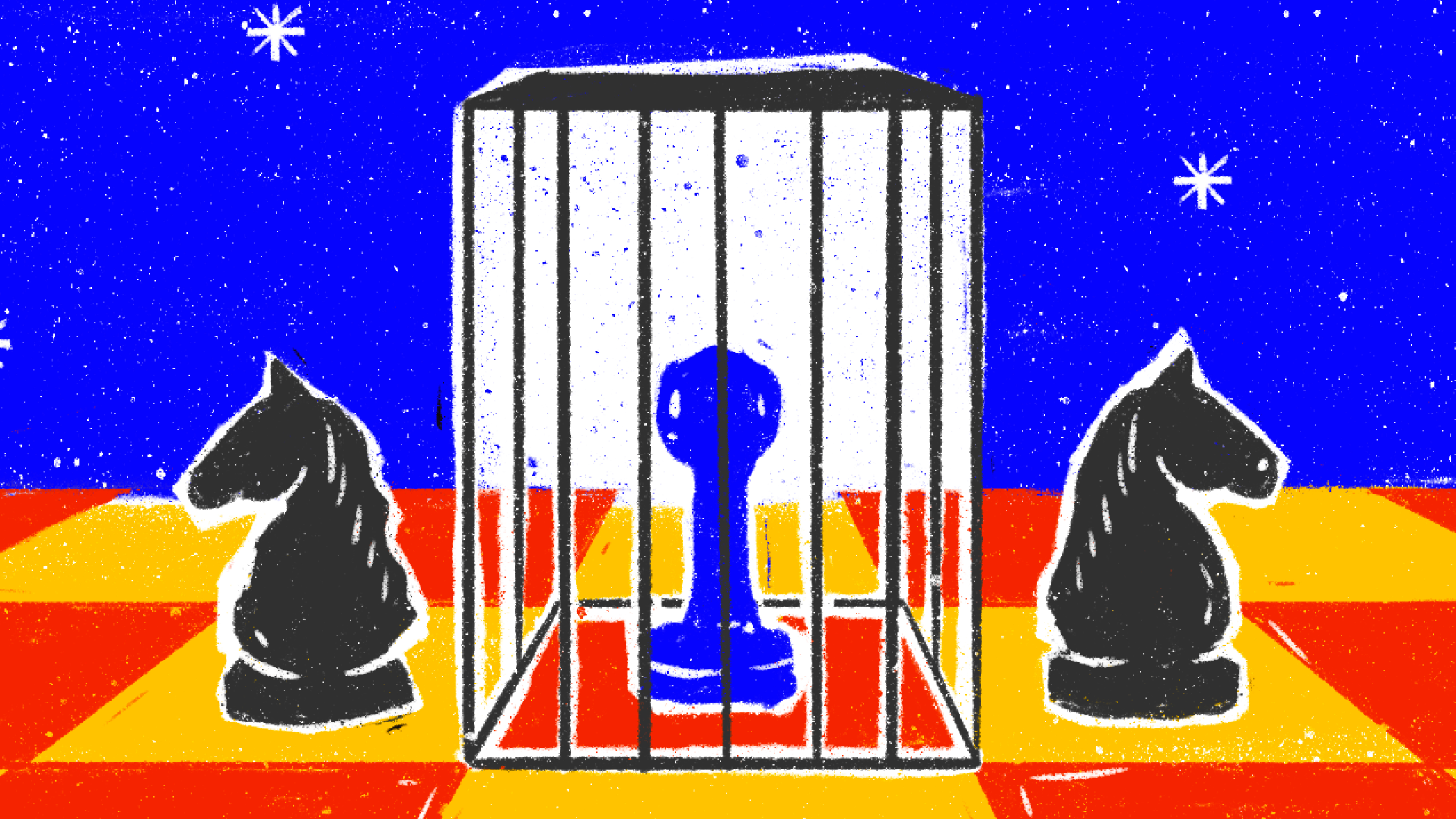
[Mariana Z.]: In addition to conversation and singing, the group found another way to pass the hours: chess. Iván started crafting all the pieces out of toilet paper and soap so they could play with their fellow prisoners.
[Iván C.]: I made queens, pawns, rooks, bishops.
[Mariana Z.]: But there was one detail: when they started playing chess, not everyone knew how or played at the same level. Iván and Mario, for example, learned to play while inside. They spent hours practicing — it was a great distraction.
[Iván C.]: We could play at a distance. We didn’t even have to be in the same cell.
[Mario B.]: Time passed, time passed…
[Daniel A.]: Time passed — day after day — without being able to answer the question that weighed on everyone. Why were they there? Why was Nicolás Maduro’s regime capturing foreigners? At the end of that month, January 2025, they finally began to understand.
A break — and we’ll be right back.
[Daniel A.]: We’re back. Mariana Zúñiga continues the story.
[Mariana Z.]: On January 31, 2025 — when Iván and Mario had been detained for just over two months and Alejo had already been there for four — something happened that finally gave them clues about why they were there. The news broke all around the world:
[France 24-Español / Diego Bazzani, journalist]: Venezuela releases six Americans following a high-level diplomatic meeting.
[Canal 26 / Noticias, journalist]: They had been held on Venezuelan territory. Most of them since 2024.
[Canal 26 / Noticias, journalist]: We now have the moment the released Americans spoke with President Donald Trump on the plane taking them back home.
This is incredible. I am walking on a cloud. We love you, Trump.
[Mariana Z.]: An envoy from President Donald Trump met with Nicolás Maduro, and shortly after, this release took place. Many saw it as a tactic by Venezuela to secure certain benefits — especially relief from oil sanctions and recognition of the regime’s legitimacy by the new Trump administration.
Iván heard the news through the Venezuelans upstairs.
[Iván C.]: I remember that’s how the news reached us — the Venezuelans passed it down to us. Nothing happens there without us knowing.
[Mariana Z.]: At that moment, Iván started to understand everything…
[Iván C.]: Look — Maduro was very scared of losing his presidency. So he needed the international community to recognize him as president. And he needed bargaining chips. He needed little pieces he could put on the table and say: hey, come here. I’m the president of Venezuela. I’ve got some people here. Why don’t we work something out? Let’s negotiate — get them to sit down and negotiate with him.
[Mariana Z.]: Also toward the end of January or the beginning of February — nobody remembered the exact date — another development came for the foreigners. After months of complete lockdown, they were finally taken out to the courtyard one day. In Iván’s case, 90 days had passed without going outside in the sunlight. What struck me was that what moved him most wasn’t the fresh air, but the encounter with his fellow prisoners — seeing them face to face, without bars between them.
[Iván C.]: Out in the yard, you tried to connect with your friends — the other people who were there. People you couldn’t see all day because they were in other cells or in another section. You know what I mean?
[Mariana Z.]: From that point on, the routine changed. They began seeing each other every day, at least for an hour, and the bond between them grew stronger.
[Iván C.]: It was things like passing each other a juice, or little things you could have in there — like: I’m out of soap. Can you give me a piece if you have some? Or slipping someone a piece of bread, or a cookie if you got one, or something like that.
[Mariana Z.]: Acts of kindness that, in the middle of that confinement and horror, were a reminder that they were still human. Friendship, in that context, becomes both a survival strategy and an act of defiance. And something that — in freedom — might seem as insignificant as sending greetings, inside meant everything…
[Iván C.]: Some people might think: oh, how trivial, sending someone a greeting. But when you’re in a situation like the one we were in, a greeting could make your whole day.
It was like… it awakened in you a feeling of affection, of brotherhood, of friendship, of love.
They try to dehumanize you. So you come to believe you’re worth nothing. But if you feel loved and important to someone, and they’re showing it by sending you a greeting — it brightened those days, even just a little.
[Mariana Z.]: The following month, in February 2025, Iván was taken out of Rodeo for the first time and brought before a judge along with other prisoners. Remember that Iván is a lawyer by training and knows well what due process should look like. But according to him, what he faced was very far from a real court.
[Iván C.]: It’s a clown dressed as a judge, with more clowns playing prosecutors, clerks, and everything else.
[Mariana Z.]: Iván knew perfectly well that what was happening wasn’t legal. From a technical standpoint, what he was witnessing was a staged performance — a simulation of justice.
They charged him with espionage, sabotage, terrorism…
[Iván C.]: I was apparently a criminal — the most wanted man in all of Venezuela.
[Mariana Z.]: He was never allowed to see the case file. He was denied consular assistance, and a private attorney — not just him, but everyone.
[Iván C.]: The public defender — a Chavista-appointed lawyer — told us: don’t ask anything, don’t say anything. That’s what your own lawyer told you. Oh, okay, thanks, counselor. It was a farce. A lie.
[Mariana Z.]: That was the first and last time Iván and the others stood before a judge. It was also the only time they ever saw a lawyer.
When they returned to the prison, they resumed the usual routine. Time stood still. March passed, April, May…
Then June arrived. For Iván, seven months had now passed since he was first locked up. One day, something new happened. He and some of the other foreigners were allowed to make their first phone call.
The turn to call was assigned by cell order. Iván was in cell number eight. But three doors down, in cell number five, was another Colombian — who, like Iván, was from Cúcuta.
[Iván C.]: And he didn’t have any phone numbers memorized, so he wasn’t going to be able to call anyone.
[Mariana Z.]: He had no one to call because he couldn’t remember any numbers by heart.
[Iván C.]: So I said to him: why don’t you call my mom? At least ask her to track down your wife and get in touch with your family so they at least know you’re here.
[Mariana Z.]: Iván recited the number through the cell bars. The Colombian memorized it, and when the guards took him to the phone, he called Iván’s mother. It was through that fellow prisoner that Iván’s mother was finally able to confirm her son was alive.
[Iván C.]: He told her: don’t worry, your son is doing okay. So when I finally called, there was — yes, of course — my mom’s excitement, but she was a bit more composed by then. Or she was trying to hold herself together so she wouldn’t affect my emotional state.
Imagine — after seven months of not knowing anything about your son, he calls for five minutes to say: I’m okay, don’t worry, I don’t know when I’ll be back. That’s a lot for any family to bear.
[Liliana C.]: It was very, very, very sad. There was joy in knowing he was alive — that he really was alive. But after that, everything became even more exhausting, especially for my mom. I remember that night she didn’t sleep — she just cried and cried.
[Mariana Z.]: The following month, a rumor began circulating through the prison, passed down from the Venezuelan prisoners on the upper floors.
Recall that after launching its mass deportations, the Trump administration accused 252 Venezuelans of being gang members and sent them to CECOT, El Salvador’s maximum-security prison. Now word was spreading that those Venezuelans deported by the United States would be exchanged for several foreign prisoners held in Venezuela.
At Rodeo 1, the news sparked enormous anticipation.
[Iván C.]: I remember we’d hear every weekend: word is they’re going to free everyone — that all the political prisoners in Venezuela are going to be released in exchange for the 252 held abroad.
[Mariana Z.]: Until July 18, 2025, when the exchange finally came…
[Noticias Telemundo journalist]: This is how the Venezuelan migrants who spent four months imprisoned in El Salvador arrived at Maiquetía International Airport.
[Mariana Z.]: El Salvador released the 252 Venezuelans from CECOT. In exchange, Maduro freed 80 Venezuelan political prisoners. But only ten foreigners — and all of them were American citizens.
Shortly after, the Trump administration ordered a military deployment in the Caribbean, framed as an effort to intensify the fight against drug trafficking. But what we all saw on the news…
[NTN 24 / journalist]: Pay close attention. The first images of the warships heading toward waters near Venezuela…
[Mariana Z.]: …was interpreted — and experienced — in a very particular way inside Rodeo1. For Iván, those ships had only one explanation: Trump’s frustration over the outcome of the exchange.
[Iván C.]: That’s why Donald Trump — pardon my language — was furious. And from that moment, Trump’s pressure campaign began. The first fleet arrived a month later.
[Mariana Z.]: News trickled into Rodeo drop by drop.
[Iván C.]: One ship arrived. Then another. Then an aircraft carrier. Every weekend when the news came in, we lived in agony. Why aren’t they going in? What’s happening?
[Mariana Z.]: The weeks went by and… even as operations in the Caribbean continued, the foreigners had already given up hope of a military intervention setting them free. And so October arrived. At the end of that month, the Colombian consul and ambassador visited Rodeo 1 to assess the possibility of releasing some of the Colombians. The idea was to meet with the Colombian prisoners, though what would actually be discussed in that meeting wasn’t clear. There were just over 30 Colombian prisoners, but not all of them were summoned to the meeting — only 15.
Iván was not invited. Alejo, however, was on the list. The meeting was tense and chaotic.
[Manuel A.]: No matter how hard you try, you can’t get a real dialogue going — it becomes more like a clash. Everyone is stressed. They couldn’t do anything at that point. A few phrases were exchanged. And in the end it’s like: please, get us out. Tell us something about our situation. But there are 15 people, each trying to speak from their own perspective. It doesn’t flow.
[Mariana Z.]: The next day, those who hadn’t been part of the first meeting were called in. Among them was Iván.
Before he left, Alejo managed to speak with him in the courtyard:
[Manuel A.]: Iván, it’s your turn. You’re a lawyer. Try to steer the situation as best you can. Try to get them coordinated so there’s less friction and a real dialogue can happen. Let’s see what can be worked out with the ambassador.
[Mariana Z.]: Iván and the other 16 Colombians left the yard that day thinking they were heading to a meeting with the ambassador. But they weren’t…
[Iván C.]: They took us to a room and took absolutely everything away from us. Our uniforms.
[Mariana Z.]: They shaved their heads down to the skin. Then they told them to pick clothes from a pile of used garments.
[Iván C.]: They handed us other people’s clothes — from other prisoners there, I suppose. Like: find something that fits and put it on.
[Mariana Z.]: Iván didn’t understand what was happening. The only thing he could think was that they were being transferred to another prison.
[Iván C.]: I thought: okay, maybe this meeting with the ambassador is about moving us to a prison where we can at least make calls or have a bit more freedom. That’s what I thought at that moment.
[Mariana Z.]: When they finished getting dressed, they were handcuffed, hooded, and loaded onto a bus. At no point were they told where they were going. They traveled for more than 14 hours.
[Iván C.]: I didn’t even know who was on that bus with me, because we couldn’t talk, we couldn’t do anything.
[Mariana Z.]: Finally, the bus stopped. A guard got on and gave the order: remove the hoods and handcuffs.
[Iván C.]: When he took off our hoods and removed the cuffs, he had us line up inside the bus, and I started looking around. I recognize this place. I’ve been here before.
[Mariana Z.]: It was the Atanasio Girardot International Bridge, which divides Colombia and Venezuela. On the other side was his city — Cúcuta.
[Iván C.]: And the guard said: thanks to the good relations and diplomacy between Colombia and Venezuela, you are going to be released.
[Mariana Z.]: It was October 24, 2025. Iván was released after 357 days detained in Venezuela. Almost a year of his life. That morning, the international bridge was packed with journalists — but also with familiar faces. Waiting for him were his mother, his sister Liliana, his closest friends, and some family members.
[Mariana Z.]: The news had leaked a day earlier, when President Gustavo Petro confirmed the release of the group. The word spread quickly to the mothers of the 17 Colombians, who mobilized along with the press from the early hours of the morning.
[Liliana]: There were so many people — it was incredible. It was overwhelming, so many people. Where’s Iván? Where’s Iván? My mom and I were screaming and screaming, surrounded by crowds, everyone hugging each other. But once we finally saw him, obviously my mom and I just pushed through — make way, let us greet him. After that, everyone joined in — everyone wanted to say hello, to hug him, to kiss him. So… I had a little trouble recognizing him, honestly. His head was shaved, he was thin — very, very thin.
[Canal TRO]: Release of lawyer Iván Colmenares
[Mariana Z.]: Amid all the noise, Iván felt disoriented.
[Iván C.]: At that moment I felt happy and glad. Happy because I was recovering my freedom — and sad because of my friends, the people left behind. I was leaving behind friends and brothers I had made there.
We never had a proper moment — like: hey, I’m leaving, take care. It was nice knowing you. Thank you for everything. We never had that goodbye.
[Mariana Z.]: Since then, Iván has been trying to rebuild his life, little by little. But the process hasn’t been easy. It took him months to come to terms with his freedom.
[Iván C.]: Part of me missed my cell, missed… what I had been living. You know? Having everything change so abruptly is completely jarring.
[Mariana Z.]: He lost the job he had. He missed the days before his detention, his routine… After a year of absence, thousands of things change. But it went deeper than that — he also missed his fellow prisoners from Rodeo 1, and he realized he was thinking about them constantly.
[Iván C.]: I missed them deeply. My friends, the people I talked with every day. Mario Burló — the friend in the cell across from me — was like a father figure to me in that place. I spent days without sleeping, thinking, crying, gripped by anxiety. These are very intense things you go through in the aftermath of that kind of trauma.
[Mariana Z.]: Meanwhile, Mario and Alejo were still in Rodeo 1. They were there on January 3, 2026… the last day Maduro spent in the country.
[User-compiled videos]: You can hear helicopters — it’s 1:58 in the morning. They’re attacking Fort Tiuna.
[Manuel A.]: That early morning we did sense it, we did hear it — the sound of a plane, for about 40 minutes, an hour. It was strange. But in my case, I told the others: since December there have been overflights, so I don’t know. Stay calm. I really don’t think anything happened.
[Mariana Z.]: But something had happened.
[Libertad Digital]: There’s a bombardment right now in Higuerote. The missiles are falling. Oh my God…
[Mariana Z.]: The United States struck several strategic points in Venezuela in a military operation called “Absolute Resolution.” It was a lightning-fast operation that, within hours, captured Maduro and his wife Cilia Flores. That same day, Vice President Delcy Rodríguez assumed power as interim president.
But they didn’t learn about this news until a week later, when the Venezuelan prisoners received visits from their families.
[Manuel A.]: And you hear one of the fellow prisoners say from somewhere: they caught Maduro.
[Mario B.]: They grabbed Maduro. Everyone — aaaah! We all cried tears of joy.
[Manuel A.]: Now that’s news. Oh! Holy hell. And the whole prison erupted into shouting at that moment.
[Mariana Z.]: That same week, the president of the National Assembly announced that a significant number of political prisoners would be released.
[Manuel A.]: Throughout that whole week, people were getting out. The Europeans got out. The Asians got out.
[Mariana Z.]: Among them was Mario, who was released on January 13. They took him to the Italian embassy to meet with the ambassador and consul. From there, he was escorted directly to a plane. Only half an hour after takeoff — when he knew he was officially out of Venezuela — was Mario finally able to feel at peace.
[Mario B.]: Dopo media ora ho detto — half an hour later I said: now we are free. We are no longer in Venezuela. Thank God.
[Mariana Z.]: In the months since, Mario has been trying to rebuild his habits — above all, sleep. He still struggles to sleep more than four hours. Whenever he can, he speaks about his experience in Venezuela and advocates for the release of his fellow prisoners.
But back at Rodeo… Alejo was still waiting to be released.
[Manuel A.]: A week passed with no more releases. Almost only the Latin Americans remained. Then the Panamanian got out, then another pause, and I thought: this should be happening faster. The Hondurans got out — and then, finally, it was my turn.
[Mariana Z.]: Alejo was released on February 10, 2026. He had spent 17 months in prison.
When he left Rodeo, 16 Colombians still remained, along with a Cuban, an Argentine, a Bulgarian, and a Frenchman. When we spoke, I asked him if he had any idea why he was released while the others weren’t — if he knew of any specific criteria or order…
[Manuel A.]: I still ask myself that. Because I don’t know exactly the circumstances of my release. So you’re grateful, obviously, but you also carry this internal guilt — knowing they’re still in there, thinking about them. You really wonder: why? What was different about my situation?
[Mariana Z.]: He still doesn’t know.
Even so, these men are clear about one thing: they are now bound by a unique connection. It was forged in impunity and the abuse of power, and it deepened as they shared an experience filled with injustice, mistreatment, and horrors. That bond is still strong. To stay connected, the foreigners who have been released from Rodeo 1 created a WhatsApp group called “Los Libertadores”
[Companion 1]: Greetings to everyone in the group — to those of us who are free, and to all those who are still in there.
WhatsApp group
[Companion 3]: What a relief that nightmare is over — how wonderful that you’re with your family. It’s a real pleasure to see you here in our group. May the brotherhood of this group keep growing and growing, as it should.
[Mariana Z.]: When Iván joined the group in October 2025, there were only 12 or 13 members. Now there are more than 60. Every time someone new joins, everyone welcomes them with joy.
[Iván C.]: It’s moving to see that every day brings a new member. That so-and-so showed up, that we’re going to add this companion who was there with us.
[Mariana Z.]: It’s a space where they can talk about a trauma that only they can truly understand — one that, for many, isn’t easy to share with their families.
[Alejo]: God — truly understanding what confinement means. Having that tiny space 24 hours a day, unable to move beyond it. The only people who can truly understand that are the ones you lived it with.
WhatsApp group collage
[Companion 2]: And let’s pray for our brothers still in Rodeo I — that they get to leave and be with their families, with the people they love most in the world.
[Companion 7]: Gentlemen, I just had a very long conversation with José María. He’s still very shaken by the news of his release. Be patient with him — he’s been added to the chat. He’s beyond happy and has a lot of information to share with us.
[Companion 6]: Already home. Work is secured. Family. This weekend I’m spending it with my daughter. That’s where we are — trying to be normal.
[Mariana Z.]: And that’s exactly what they’re all trying to do now: find their way back to normal.
[Daniel A.]: In February 2026, an Amnesty Law was passed to free political prisoners, but barely two months later the government reversed it and halted the releases. This measure left hundreds of people behind bars.
Mariana Zúñiga is a producer at Radio Ambulante and lives in Caracas. This story was edited by Camila Segura and Luis Fernando Vargas. Fact-checking by Bruno Scelza. Sound design by Andrés Azpiri. Music by Ana Tuirán, Remy Lozano, and Andrés.
The rest of the Radio Ambulante team includes Paola Alean, Adriana Bernal, Aneris Casassus, Diego Corzo, Emilia Erbetta, Camilo Jiménez Santofimio, Germán Montoya, Sara Selva Ortiz, Samantha Proaño, Natalia Ramírez, Lina Rincón, Juan Pablo Santos, David Trujillo, Elsa Liliana Ulloa, and Luis Fernando Vargas.
Carolina Guerrero is the CEO.
Radio Ambulante is a podcast from Radio Ambulante Estudios, produced and mixed using Hindenburg PRO.
If you enjoyed this episode and want us to keep making independent journalism about Latin America, support us through Deambulantes, our membership program. Visit radioambulante.org/donate and help us keep telling the stories of the region.
Radio Ambulante tells the stories of Latin America. I’m Daniel Alarcón. Thanks for listening.